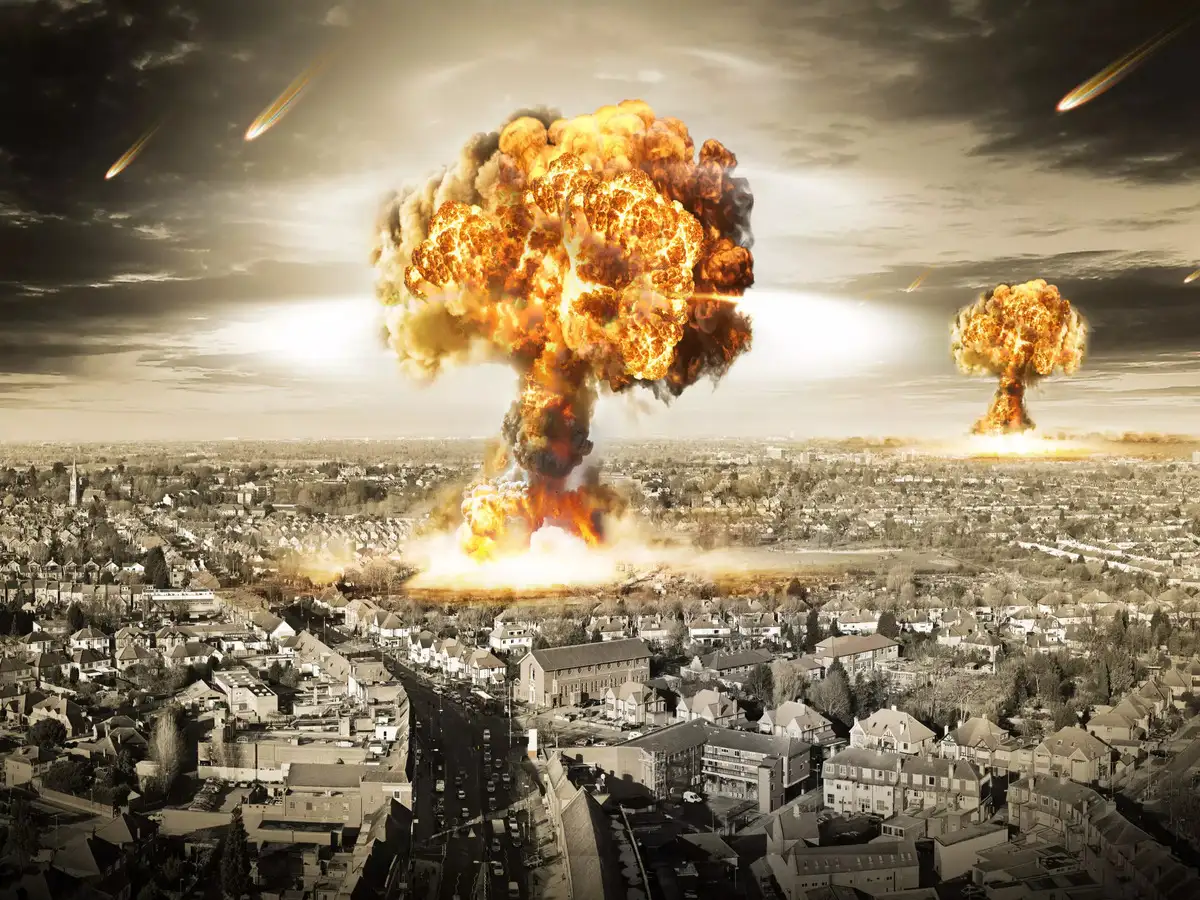
With rising global tensions—from escalating conflict in the Middle East to ongoing wars elsewhere—fears of a nuclear confrontation are no longer just the stuff of sci-fi. And while no place on Earth would be completely unaffected, one expert says there are two locations where you’d stand the best chance of surviving a nuclear apocalypse—and they may not be the ones you expect.
Earlier this week, the United States confirmed it had launched missiles targeting three Iranian nuclear facilities, following Israel’s strikes on June 13. The strikes came amid accusations that Iran was advancing its nuclear weapons program. Though a ceasefire has since been reinstated—despite accusations from Israel that Iran violated it—the global community remains on edge.
In light of these developments, investigative journalist and author Annie Jacobsen, a leading voice on nuclear threats, has identified two countries she believes offer the best shot at survival should nuclear war break out: Australia and New Zealand.
Speaking on The Diary of a CEO podcast, Jacobsen explained why the Southern Hemisphere, particularly these two nations, could be humanity’s last safe haven in a post-nuclear world.
“Places like Iowa and Ukraine would be just snow for 10 years,” Jacobsen said, referring to the effects of a nuclear winter. “So agriculture would fail, and when agriculture fails, people just die.”
The devastation wouldn’t just be from bombs, she warned, but from the collapse of global food systems, environmental fallout, and radiation poisoning.
“The ozone layer will be so damaged that people won’t even be able to go outside,” she said. “Most will be forced to live underground, battling for scarce food—except, potentially, in New Zealand and Australia.”
Why these two countries? Jacobsen points to their geographic isolation and Southern Hemisphere location, which would spare them from the worst of the nuclear fallout and allow them to continue agriculture, at least to some degree.
She referenced a 2022 study by Professor Owen Toon, a prominent researcher of nuclear winter, who concluded that up to 5 billion people would die from the aftermath of a large-scale nuclear war—primarily due to famine, not the initial blasts.
“If the population is around eight billion,” Jacobsen said, “that leaves three billion survivors. And if you want to be one of them, according to Toon, you’d want to be in New Zealand or Australia.”
The Nuclear Map of the U.S.: Where You Don’t Want to Be
Closer to home, Newsweek and Scientific American analyzed U.S. nuclear vulnerability based on proximity to missile silos and strategic military targets.
The worst places to be? States with a high concentration of ICBM (Intercontinental Ballistic Missile) silos, such as:
Montana
Wyoming
Nebraska
North Dakota
Colorado
According to Scientific American, each missile silo would be targeted with one or more nuclear warheads, capable of creating “gargantuan fireballs” and devastating shockwaves that would obliterate surrounding areas.
So where are the safest spots in the U.S.? Newsweek lists the following states as being furthest from expected impact zones:
Maine
New Hampshire
Vermont
Massachusetts
Rhode Island
Connecticut
New York
New Jersey
Pennsylvania
Delaware
Maryland
Washington, D.C.
Virginia
West Virginia
North Carolina
South Carolina
Georgia
Florida
Alabama
Mississippi
Tennessee
Kentucky
Ohio
Indiana
Michigan
While no place is entirely safe in a full-scale nuclear conflict, these regions are believed to be furthest from direct hits.
Final Thought
The idea of nuclear war is chilling, and while governments may debate strategy and diplomacy, individuals are left wondering what they would do if the unthinkable happened. According to experts like Jacobsen and Toon, the key to survival may not lie in bunkers or stockpiles—but in geography.
And if worst comes to worst, it might just be time to book that one-way ticket to New Zealand.