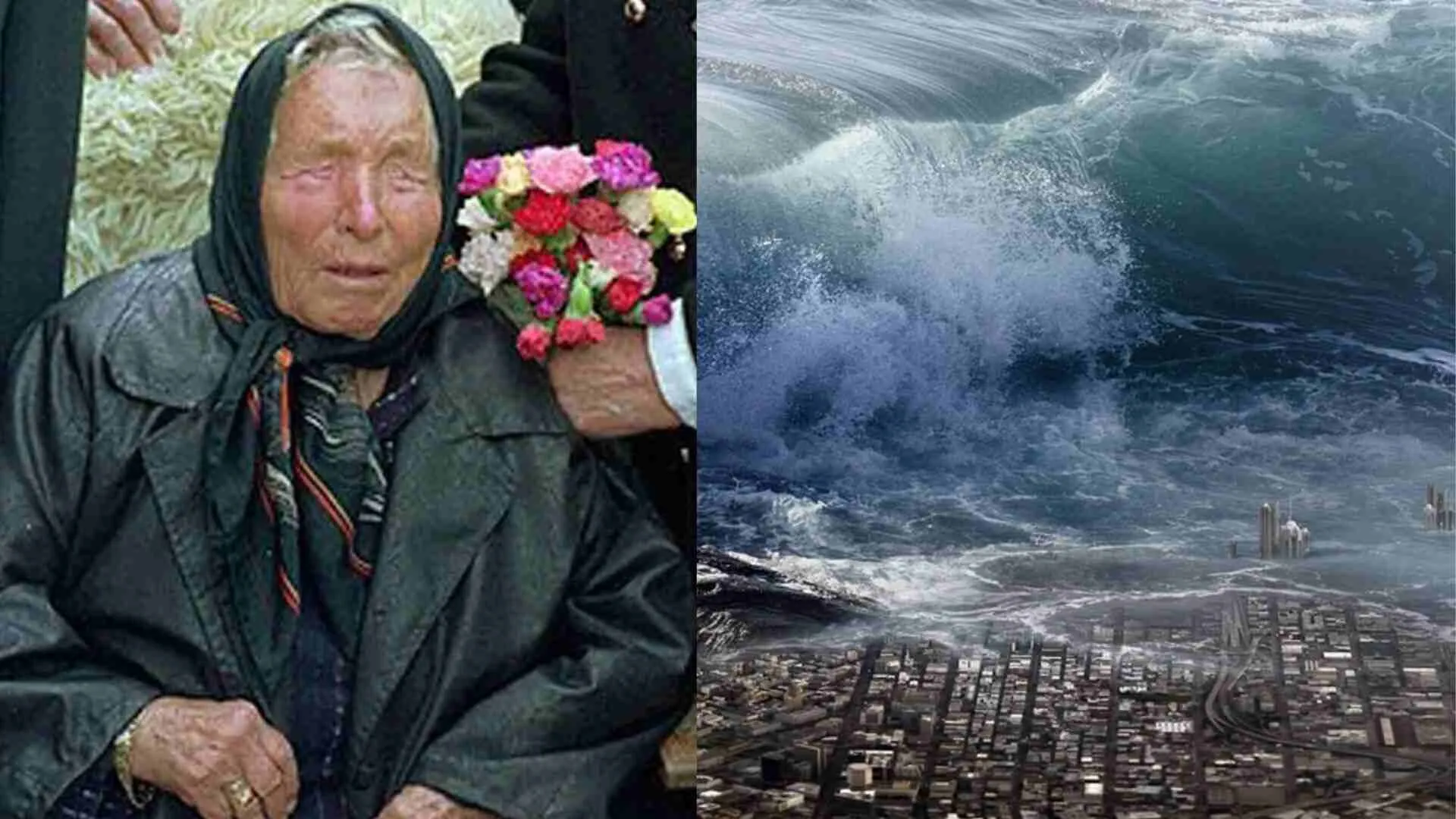
A wave of panic is rippling through Japan’s tourism industry following an ominous prediction by manga artist Ryo Tatsuki — a woman some are now calling Japan’s version of ‘Baba Vanga.’ Tour cancellations are surging, flights are being reduced, and speculation is running wild, all because of one chilling claim: that a catastrophic disaster will strike southern Japan on July 5, 2025.
Tatsuki, who authored the cult-favorite manga The Future I Saw in 1999, claimed she’s had prophetic visions since the 1980s. Several of her past predictions — including specific dates — have reportedly come true, bolstering her cult following. But it’s her depiction of the “boiling ocean” in southern Japan that has recently captured public attention, especially following a 7.4-magnitude earthquake that struck Myanmar on March 28.
That real-world tremor sent anxiety levels soaring. In the days that followed, Japanese authorities released new worst-case scenario models for a mega-quake in the Nankai Trough, and the Chinese Embassy in Tokyo issued a notice advising citizens to stay alert and consider safer travel arrangements. That combination was enough to set off a cascade of travel cancellations, especially from Hong Kong.
Flight bookings have dropped to 83%, according to NDTV, and at least two major Hong Kong-based airlines have cut back routes to Japan. Tokushima’s Tourism Promotion Division called the sudden wave of cancellations “surprising” and lamented that “such rumors” had driven so many people away.
But scientists are urging calm — and common sense.
“There is no scientific method today that allows us to predict the precise time or location of an earthquake,” said Professor Sekiya Naoya of the University of Tokyo, in a statement to NHK. “This is fear-mongering, not science.”
Kimiro Meguro, a disaster mitigation engineering professor at Tokyo University, echoed the skepticism. “A manga from decades ago cannot forecast a major seismic event,” he told This Week in Asia. “These rumors only heighten public anxiety and can be harmful in other ways.”
Adding to the frenzy, a feng shui expert in Hong Kong recently echoed concerns about a July earthquake in Japan — further fueling speculation. But experts warn that the viral spread of unverified predictions, especially across social media, is doing real harm to Japan’s economy and public confidence.
Miyagi Governor Yoshihiro Murai weighed in on the situation, criticizing the way superstition has been allowed to steer public behavior. “It’s a serious problem when information without scientific backing goes viral and impacts our tourism industry,” he said.
As July 5 approaches, many are watching and waiting — some with curiosity, others with dread. But experts stress the importance of relying on science, not superstition.
For now, Tatsuki’s so-called “prophecy” remains just that: a rumor. And like many before it, time will be the ultimate judge.
Be First to Comment