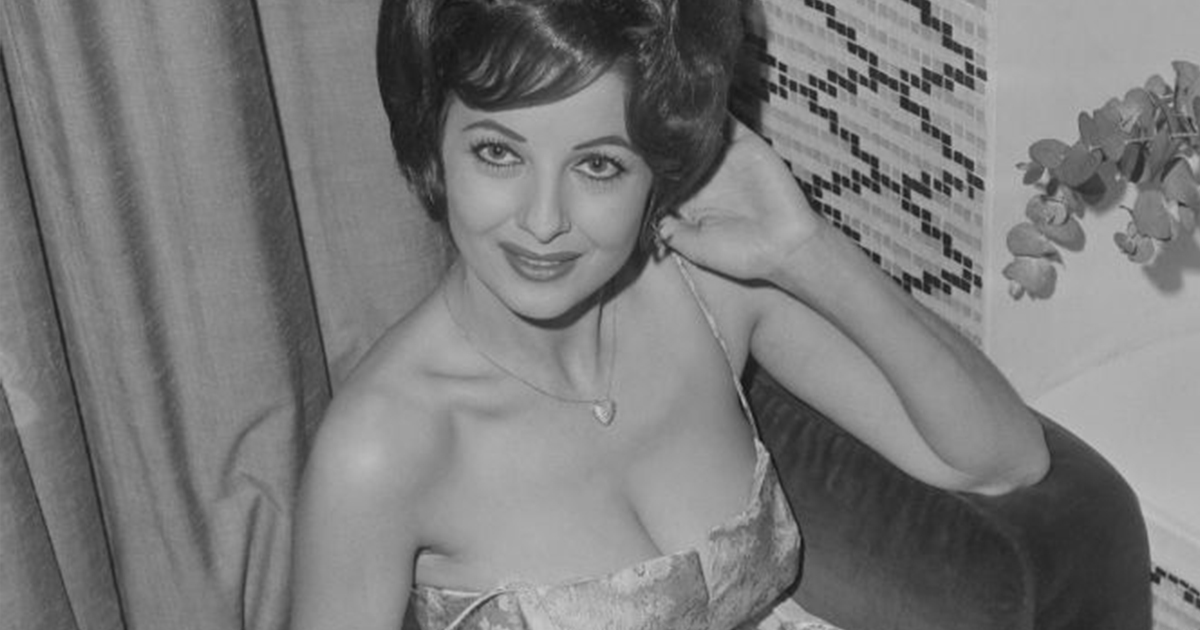
With a name like Tempest Storm, audiences could hardly expect anything ordinary. And for more than six decades, the fiery red-haired performer delivered exactly what her name promised: glamour, confidence, controversy, and unforgettable performances.
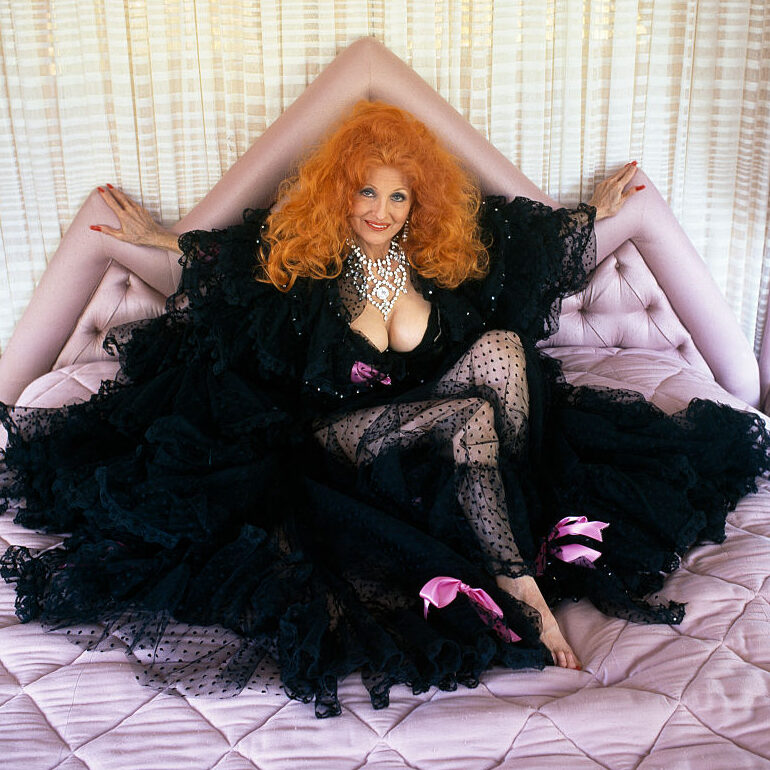
With her signature red hair, dazzling rhinestone costumes, and unapologetic attitude, Tempest Storm became one of the most recognizable figures in American burlesque. Her career spanned more than eight decades, transforming her from a young woman escaping a difficult childhood into an international entertainment icon.
But behind the glittering costumes and glamorous stage persona was a woman whose journey began in poverty in the segregated American South. Through determination, ambition, and an extraordinary willingness to challenge social expectations, she eventually earned a title few performers could claim: the Queen of Burlesque.
Her story was about much more than taking the stage. It was about independence, breaking barriers, and refusing to let society dictate how a woman should live.
From Annie Banks to Tempest Storm: A Childhood Far From Glamour
Long before audiences knew her as Tempest Storm, she was Annie Blanche Banks, born on February 29, 1928, in Eastman, Georgia.
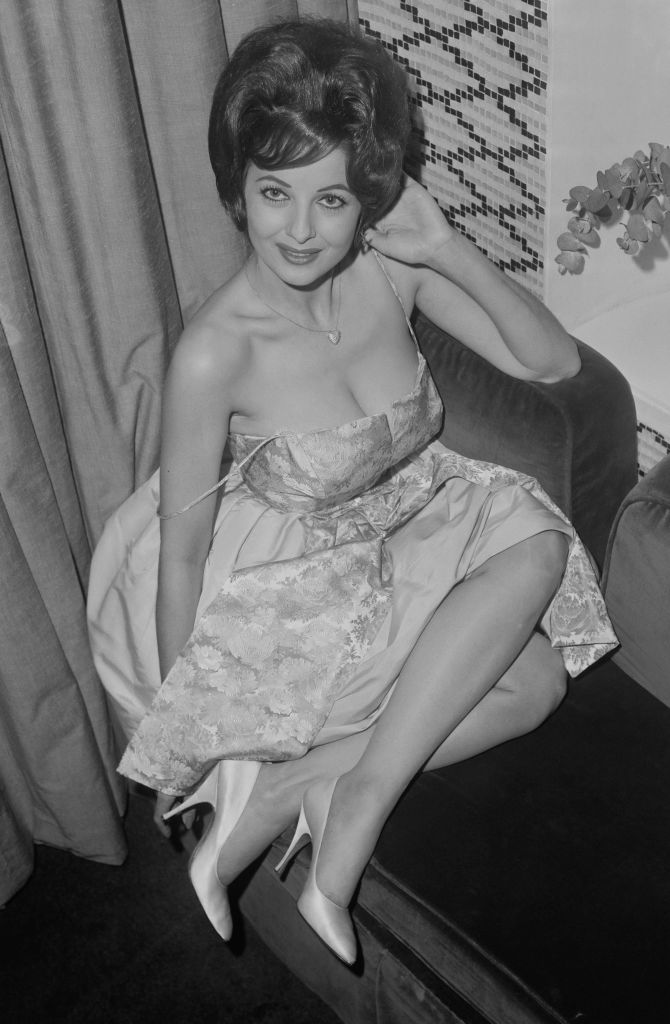
She grew up in a small farming community, far removed from the bright lights and glamorous entertainment world she would eventually conquer. Her early life was marked by poverty, difficult family circumstances, and abuse.
By the age of 14, she had reached a breaking point and ran away from home in search of a different future.
She eventually found work as a waitress in Columbus, Georgia. Determined to escape her parents’ control, she married a United States Marine, believing marriage would legally free her from their authority. However, the marriage was annulled just 24 hours later.
The following year, when she was only 15, she married a local shoe salesman whose sister worked alongside her at a hosiery mill.
But even marriage could not convince her to abandon the dream that had already taken hold of her imagination.
In a 1968 interview with film critic Roger Ebert, Storm reflected on her decision to leave her second husband and pursue a life in Hollywood.
“I just left one day. I still had it in my mind to go to Hollywood. I couldn’t get it out of my system,” she recalled.
By her late teens, she had made her way to Los Angeles, where an entirely different life was waiting for her.
It was there that a casting agent suggested a stage name that would eventually become famous across the country.
When Storm asked for suggestions, the agent proposed two possibilities: Tempest Storm or Sunny Day.
The future performer later remembered the conversation:
“I asked her if she had any suggestions. She said, what about Tempest Storm? I asked her if she had any other suggestions. Well, she said, what about Sunny Day? Well, I said, I guess it might as well be Tempest Storm.”
The decision proved unforgettable. The name perfectly captured the bold personality and dramatic stage presence that would soon make her a household name.
However, her entry into burlesque was almost accidental.
While working as a cocktail waitress, a customer noticed her natural charisma and asked whether she would consider performing a striptease.
At the time, Storm had little understanding of what the performance involved.
“I said, ‘What is that?'” she recalled in a 2013 interview with The Quad-City Times.
“I was from a small town, I didn’t know. He said it was just dancing, but you take your clothes off. I said: ‘Oh, no, not me. My mother would disown me.'”
Despite her initial hesitation, that conversation would eventually lead her toward a career that transformed the burlesque industry.
A Star Is Born: How Tempest Storm Conquered Burlesque
Tempest Storm made her burlesque debut in the late 1940s, and it did not take long for audiences to become captivated by her performances.
At a time when burlesque was often associated with provocative entertainment, Storm brought a different kind of presentation to the stage.
Her performances were carefully choreographed productions built around glamour, theatricality, and anticipation. Rather than relying solely on revealing costumes, she understood the importance of building excitement through movement, timing, and stage presence.
Her dazzling rhinestone-covered gowns became a signature part of her act, while her performances emphasized elegance and showmanship.
Looking back on the expectations of the industry during a 1973 interview, Storm explained how much more restrictive burlesque costumes once were.
“I was more respectable then,” she remembered.
“You had to wear net panties and a net bra plus jeweled pasties – you couldn’t wear a G-string.”
Her popularity grew rapidly, and by the middle of the 1950s, she was reportedly earning approximately $100,000 annually. Adjusted for modern inflation, that would amount to nearly $950,000 today.
Her famous figure became almost as celebrated as her performances. Reports claimed that Lloyd’s of London had insured her breasts for an extraordinary $1 million, a story that generated considerable publicity.
Newspaper headlines played along with her image, giving her memorable nicknames such as “Tempest in a D-Cup” and “The Girl Who Goes 3-D Two Better.”
Her fame was so considerable that her physical appearance became part of elaborate promotional events.
In one widely publicized episode, designer James Berry created a mannequin based on Storm’s measurements for display outside a San Francisco theater where she was performing.
The project celebrated the million-dollar mark she had reportedly generated through theater box offices. Storm, whose measurements were listed as 39-24-34, also applied for $1 million in body insurance as part of the event.
She was no longer simply another performer on the burlesque circuit. She had become a major attraction.
During her career, Storm shared stages with other celebrated burlesque performers, including Blaze Starr and Lili St. Cyr.
She also appeared in films such as Teaserama (1955) and Buxom Beautease (1956), the latter featuring Bettie Page.
These productions pushed entertainment boundaries during an era when discussions surrounding sexuality, censorship, and women’s public expression were considerably more restrictive.
Through her performances, Storm helped establish burlesque as an art form built around personality, theatrical presentation, and individual expression.
The Burlesque Queen Who Refused to Change Her Appearance
Storm’s popularity was not simply the result of her stage routines. Her distinctive appearance and personal philosophy also helped establish her reputation.
Her naturally curvaceous figure and fiery red hair became instantly recognizable trademarks. At a time when cosmetic procedures were becoming increasingly discussed in the entertainment industry, Storm reportedly refused plastic surgery.
She believed she did not need to change her natural appearance to remain attractive or successful.
She also maintained a disciplined approach to her lifestyle. She did not smoke and avoided alcohol and other stronger drinks, preferring beverages such as orange juice and 7-Up.
Her daily routine reflected an interest in maintaining her appearance and physical well-being.
At home, she reportedly began her mornings with a crunchy granola breakfast. Her afternoons could include massages, sauna sessions, and time relaxing in a whirlpool.
For Storm, maintaining her appearance was part of looking after herself, rather than simply trying to satisfy the expectations of an industry obsessed with beauty.
Her confidence and refusal to follow every changing beauty trend helped distinguish her from many other performers.
But perhaps the clearest indication of her popularity came from an incident in 1955.
During a visit to the University of Colorado, Storm attracted such an enormous crowd that approximately 1,500 students reportedly became uncontrollable, with the gathering nearly turning into a riot and leaving damage behind.
Recalling the experience, Storm offered a characteristically blunt explanation for the students’ reaction.
“They must have been shut up for months without women, they rushed me like a herd of cattle,” she said.
It was a remarkable example of the attention she could command simply by appearing in public.
Her Interracial Marriage Challenged America’s Social Taboos
While Storm’s professional life was filled with attention and headlines, her personal relationships also attracted considerable public interest.
Over the years, she was romantically linked to several well-known figures, including Elvis Presley, actor Mickey Rooney, and gangster Mickey Cohen.
However, one relationship stood out above the rest because of its cultural significance.
In 1959, Storm married Herb Jeffries, a celebrated jazz singer and actor who had become known as Hollywood’s first Black singing cowboy.
Their relationship challenged deeply rooted racial attitudes in American society at a time when interracial marriage remained illegal in many parts of the country.
The couple had a daughter together, Patricia Ann Jeffries.
According to The New York Times, Storm’s marriage to Jeffries “broke midcentury racial taboos, costing her work.”
The consequences were significant.
As public attitudes toward their relationship became increasingly controversial, Storm reportedly experienced a decline in professional opportunities. Media attention also dropped, and the photographers and reporters who had once followed her career became far less visible.
Her marriage placed her at the center of a social issue that extended well beyond the entertainment industry.
Although the relationship eventually ended, Storm did not publicly retreat from the choices she had made.
She and Jeffries reportedly remained “closer than ever” even after their separation.
For a woman who had spent much of her career challenging expectations, standing by her personal decisions was another example of her determination to live on her own terms.
Still Commanding the Spotlight Well Into Her 80s
Many entertainers find it difficult to maintain their careers as they grow older. Tempest Storm, however, showed little interest in disappearing from the spotlight.
She continued performing well into her 60s and eventually made her final stage appearance in her 80s.
Even as the years passed, she maintained that performing remained one of the things that made her feel most alive.
In 1999, Storm made a celebrated return to the stage at San Francisco’s O’Farrell Theatre to mark the venue’s 30th anniversary.
The occasion was significant enough for San Francisco Mayor Willie Brown to officially declare a “Tempest Storm Day” in her honor.
The recognition reflected just how deeply she had become connected to the city’s entertainment history and the wider burlesque community.
Her connection to the industry continued for years afterward. She appeared at annual Burlesque Hall of Fame Pageant events at least through 2010, receiving recognition from a new generation of performers and admirers.
<caption>Tempest Storm’s remarkable career and enduring influence were also documented in the 2016 film *Tempest Storm*.</caption>
Her life and career later became the subject of the documentary Tempest Storm (2016), which explored her remarkable journey and celebrated her lasting influence on burlesque.
The film offered audiences an opportunity to look beyond the glamorous costumes and famous stage persona to understand the woman whose career had survived changing cultural attitudes, decades of social transformation, and the passage of time.
Tempest Storm’s Legacy: The Woman Who Proved Age Could Not Dim Her Star
In the later years of her life, Tempest Storm settled in Las Vegas, Nevada, where she remained a celebrated figure within the entertainment world.
She died in 2021 at the age of 93, leaving behind a legacy that extended far beyond her famous performances.
For decades, she had challenged traditional ideas about beauty, femininity, sexuality, and the role of women in entertainment.
At a time when women were often expected to follow strict social rules, Storm built a career around independence and personal confidence.
She demonstrated that sensuality did not have to disappear with age and that a woman’s value could not be measured by how closely she followed society’s expectations.
Her influence also reached far beyond the generation that watched her perform.
Modern burlesque artists, including Dita Von Teese, have acknowledged the importance of performers like Storm in shaping the art form and inspiring new generations to embrace theatricality, glamour, and self-expression.
Storm helped create a path for performers who wanted to celebrate their individuality rather than conform to conventional expectations.
Her story was also one of remarkable resilience. She escaped a difficult childhood, pursued her Hollywood ambitions, overcame social controversy, and continued working long after many entertainers would have retired.
She never allowed age, criticism, or changing cultural attitudes to determine when her career should end.
Tempest Storm truly lived up to the name that first brought her fame.
She was bold, independent, and impossible to ignore. And long after the curtains closed on her final performance, her influence remained firmly embedded in the history of burlesque.
She was more than a performer dressed in rhinestones and feathers. She was a pioneer who helped redefine what a woman could become when she refused to let the world set limits on her.