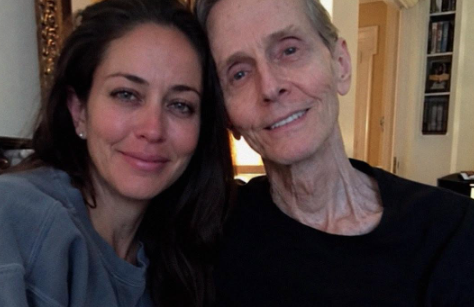
I grew up in foster care believing my father had disappeared from my life.
For most of my childhood, I had no idea where he was, whether he was alive, or whether he had simply decided that I wasn’t worth coming back for.
Then, one ordinary afternoon, a lawyer appeared at my front door with news that turned everything I thought I knew upside down.
My father was alive.
His name was Thomas.
He was wealthy.
He was dying.
And, according to his lawyer, his final wish was to spend seven days with me.
I agreed.
One week later, after my father’s funeral, I was packing my suitcase when the same lawyer placed an envelope on my kitchen table.
He looked me directly in the eyes.
Then he said something I never expected to hear.
“You walked straight into your father’s trap.”
But to understand how I ended up there, I have to go back to where this began.
The sole of my shoe came loose while I was standing in my kitchen.
I heard the soft flap against the tile and immediately looked down.
“Seriously?”
The shoe was old.
Not ruined.
There was a difference.
At least, there had always been a difference to me.
Growing up, I learned very early that old didn’t automatically mean useless. If something could still be repaired, you repaired it. If a zipper broke, you fixed it. If a shoe started coming apart, you found some adhesive and pressed it back together.
So I opened the cabinet beneath the sink, found the tube of glue, and sat down at the kitchen table.
I cleaned the edge first.
Then I carefully spread adhesive along the sole, pressed it firmly into place, and held it there.
Wait.
That was the important part.
Wait until it held.
Some habits survive childhood because they’re useful.
Others survive because your body remembers things your mind would rather forget.
I was still holding the shoe together when someone knocked on my door.
Three sharp taps.
I wiped the glue from my fingers and walked over.
When I opened the door, a man in an expensive dark suit was standing on my porch.
He looked completely out of place in my modest neighborhood.
“Are you Susan?”
“Depends who’s asking.”
He introduced himself as David.
An attorney.
For one panicked second, I assumed something was wrong with my rent, my taxes, or some other problem I couldn’t afford.
Then he said, “I represent your father.”
I laughed.
Not because it was funny.
Because I didn’t know what else to do.
“I don’t have one.”
His expression didn’t change.
“His name is Thomas.”
My hand tightened around the door.
For a moment, I couldn’t move.
I’d spent years wondering whether my father was dead, gone, or simply someone nobody wanted to talk about.
But hearing his name made him suddenly, horribly real.
“Wrong Susan.”
I started to close the door.
David spoke before the latch could catch.
“Your mother’s name was Annie.”
The door stopped.
I stared at him.
“Thomas has been trying to find you,” he said.
“Trying?”
“Yes.”
“How long?”
He hesitated.
“Thomas is very ill.”
I swallowed.
“How ill?”
“His doctors believe he has very little time.”
I almost shut the door again.
Then David said the one thing I’d spent most of my childhood imagining.
“His last wish is to see his daughter.”
His words stayed between us.
His last wish.
His daughter.
Me.
I should have told him no.
Instead, I asked, “Where is he?”
Two days later, I stood outside a house that looked like it belonged on the cover of a magazine.
Calling it a house felt dishonest.
It was an estate.
The windows were taller than the bedroom I had shared with three foster girls when I was eleven.
