I walked away from my father’s will reading with what my stepbrother believed was the least valuable inheritance.
Looking back now, I realize that was exactly what my dad wanted all of us to believe.
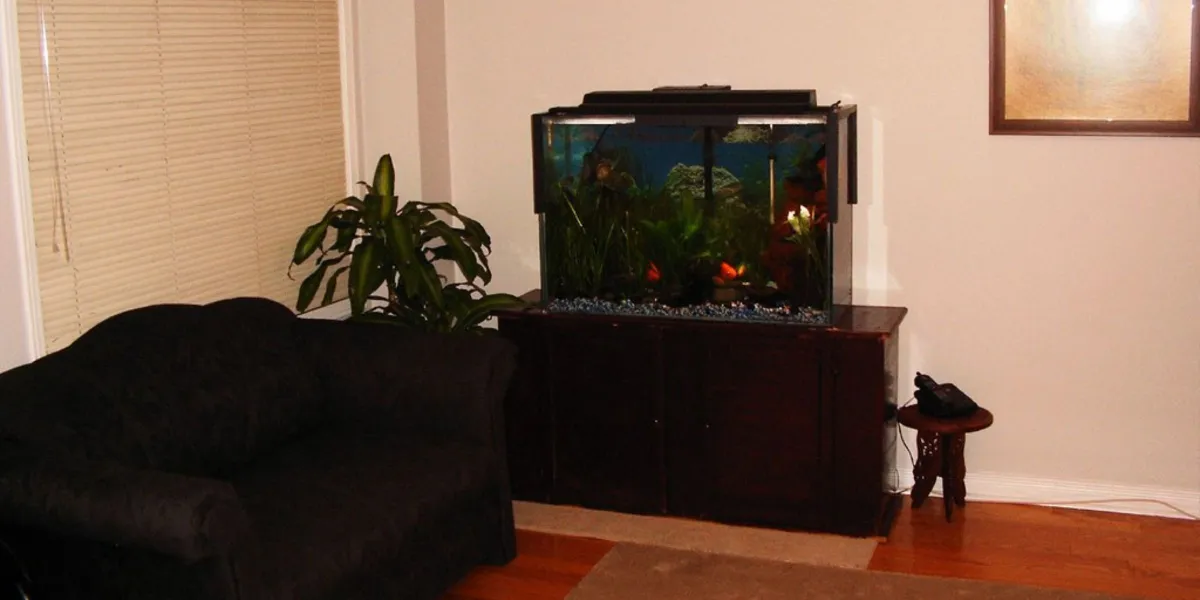
The soft hum of the aquarium filter was the only sound filling my father’s study that afternoon. He sat in his worn leather chair with a wool blanket draped over his knees, watching a small yellow tang weave gracefully between the coral.
I sat beside him, 30 years old and, somehow, still feeling like the little girl who used to press her nose against that same glass.
“They know you’re watching, you know,” I said.
Dad smiled without taking his eyes off the tank.
“They know everything, Danielle. Fish are smarter than people give them credit for.”
“They know you’re watching,” I repeated.
I laughed quietly, although there was a familiar ache in my chest.
Dad had lost weight again. His hands, once steady enough to handle delicate marine specimens through hours of laboratory work, trembled slightly when he reached for his tea.
On afternoons like that, I sometimes thought about my mother, Candice.
She had died when I was five.
For a long time, it had been just the two of us. Then Sally came into Dad’s life with her son, Billy, because Dad wanted me to have a family again.
My stepmother and my stepbrother became part of our lives.
We all pretended we were a family.
But deep down, we never truly felt like one.
Sally had married my father a few years after my mother passed away. From the beginning, I had the uneasy feeling that she was more interested in my father’s successful career than in the man himself.
Dad was a highly respected marine biologist, and Sally seemed to understand very quickly that his success came with something else attached to it.
Money.
Billy, who was 32, learned to see his stepfather the same way.
My stepbrother treated Dad like an ATM with a pulse and treated me like an irritating obstacle standing between him and whatever he believed he was entitled to receive.
Sally passed away a few years earlier, but her influence seemed to linger.
Nothing changed between Billy and me.
One afternoon, while I was sitting with Dad, I asked the question I already knew the answer to.
“Where’s Billy today?”
Dad looked toward the aquarium.
“He called,” he said. “Said he’d try to stop by this weekend.”
“He said that last weekend too.”
“I know.”
Dad didn’t sound angry.
He never did.
Instead, he watched a small clownfish dart through the anemone. There was something about the aquarium that always seemed to calm him.
After a long silence, he spoke.
“This tank,” he said, “is one of the most special things I’ve ever owned.”
“You’ve told me that a hundred times, Dad.”
“Have I?”
He finally turned to look at me.
Something about his expression felt different.
Softer, perhaps.
Or maybe sharper.
I couldn’t tell.
“Then I guess I mean it.”
I reached over and topped up the food container sitting on the shelf.
“You’ll have to remind me of the feeding schedule again. The clownfish are getting spoiled.”
Dad gave me a faint smile.
“You already know it, sweetheart. You’ve been doing it for years.”
I glanced at him.
His voice sounded more tired than usual.
“Dad, are you feeling okay? Do you want me to call the doctor?”
“I’m fine.”
He reached for my hand.
His grip was weaker than I remembered, but there was something deliberate about the way he held it.
“Danielle. This aquarium. It holds more than you realize. Promise me you’ll take care of it.”
“Of course I will. You know I will.”
Dad squeezed my hand once more.
Then he didn’t let go.
Not for a long time.
I didn’t understand what he meant.
Not then.
I wouldn’t understand for months.
“It holds more than you realize.”
That sentence stayed with me.
Last year, my father’s health began to decline rapidly.
The final months blurred into a relentless routine of doctor’s appointments, pill organizers, grocery runs and sleepless nights.
As he grew weaker, I drove to Dad’s house three or four times a week.
Sometimes more.
If he’d had a bad night, I would be there the next morning.
I cooked his meals. I cleaned the house. I refilled and managed his medications. I stood on a small stool to check the temperature of the enormous saltwater aquarium, just as he had taught me years earlier.
One afternoon, Dad watched me scrub the kitchen counter.
“You don’t have to do all this, sweetheart.”
“I know I don’t have to, Dad. I want to.”
He smiled.
It was the kind of tired smile only my father could give me, a smile that somehow still managed to hold everything.
Billy, meanwhile, rarely visited.
I knew where he was because of his social media.
Ibiza.
Beach photos.
Rooftop parties.
Champagne bottles bigger than his forearm.
The same week our father was admitted to the hospital with fluid in his lungs, Billy posted a story from a yacht.
I stared at the screen for a long time before turning my phone face down.
Billy was traveling and enjoying his life while Dad was fighting for his.
One evening, Dad asked me quietly, “Has your brother called?”
I corrected him gently.
“Stepbrother.”
Then I shook my head.
“No. Not this week.”
Dad nodded as though he already knew.
He didn’t ask again.
My father died on a Tuesday morning, just after sunrise.
I was holding his hand.
For several days afterward, grief turned everything into a blur.
I couldn’t remember what I ate.
I couldn’t remember whether I’d slept.
The house seemed enormous, while the rest of the world somehow felt impossibly small.
A week later, Miss Peters, my father’s longtime attorney, called me to schedule the reading of the will.
Billy had already flown back.
He arrived the night before, still tanned and impatient.
I remember looking at him and thinking how strange it was that we had grown up under the same roof and somehow become such different people.
The next morning, we sat in a small conference room with cream-colored walls and a jug of water that nobody touched.