The words were simple.
But they changed everything.
“Mom, you need to learn to manage on your own.”
I was standing in my kitchen when my daughter, Victoria, said them.
I was 72 years old.
I had arthritis.
I had a doctor’s appointment the next morning.
And all I had asked her for was one afternoon.
I wasn’t asking her to move in with me.
I wasn’t asking her to take care of me.
I wasn’t even asking for money.
I simply wanted her to help me carry groceries.
Maybe have lunch afterward.
My treat.
Instead, she sighed.
That long, irritated sigh I had come to recognize over the years.
“Mom, I can’t.”
“That’s okay,” I said. “Maybe Thursday?”
There was a pause.
Then she said something I don’t think I will ever forget.
“Mom, you need to learn to manage on your own.”
I stood completely still.
For a moment, I couldn’t even answer.
Because I had spent nearly fifty years making sure she never had to manage alone.
My name is Margaret Holloway.
Most people call me Maggie.
And for most of my life, I believed there was one person I could always count on.
My daughter.
Victoria.
Her father, Robert, died when she was sixteen.
I was 41 years old.
One day, I was a wife and mother.
The next, I was a widow trying to figure out how to pay a mortgage, keep food on the table, and raise a teenager who had just lost her father.
Grief didn’t stop the bills.
So I worked.
During the day, I did bookkeeping at a medical supply company.
At night, I cleaned offices.
There were winters when I wore Robert’s old hunting jacket because Victoria needed something more important than I needed a new coat.
I paid for her dance lessons.
Her school expenses.
Her college.
And when she got married, I paid roughly half the wedding.
I never kept a running total.
I never handed her an invoice.
I never said, “Remember what I did for you.”
Because that’s not how I thought a mother should love her child.
Whenever Victoria needed something, I found a way.
If I didn’t have the money, I worked more.
If I was tired, I kept going.
If I wanted something for myself, I put it off.
That was simply what being her mother meant to me.
And eventually, Victoria had the life I had always wanted for her.
She built a successful career.
She bought a beautiful home outside Columbus.
She married Derek.
They had two children, Emma and Jacob.
My grandchildren.
I should have felt proud.
And I did.
But somewhere along the way, something changed.
I became the person she never quite had time for.
My calls went unanswered.
Sometimes for days.
Visits became rare.
Christmas became a forty-minute appearance squeezed between plans with Derek’s family.
Then came my 72nd birthday.
Victoria called and said they couldn’t come.
“Derek has a company event,” she explained.
I told her I understood.
Of course I did.
Two days later, I saw the photographs online.
They weren’t at a company event.
They were at Derek’s parents’ lake house.
Victoria was standing beside her mother-in-law, one arm around her, smiling beneath a caption that said:
“Weekend with the best grandma.”
I stared at that photograph for a long time.
Then I closed my phone.
My neighbor Barbara ended up spending my birthday with me.
I told myself Victoria was busy.
She had children.
She had a career.
She had a husband.
I made excuses for her because that’s what mothers do when admitting the truth hurts too much.
Then there was the money.
Two thousand dollars here.
Five thousand there.
Once, Victoria told me she needed $7,500 for an emergency roof repair.
I transferred it.
Three weeks later, I saw pictures of her brand-new kitchen.
I mentioned it carefully.
She immediately became defensive.
“You offered it, Mom.”
Then she added:
“If you’re keeping score, that’s on you.”
That sentence stayed with me.
So I stopped asking.
I stopped mentioning the money.
I stopped expecting anything in return.
Until that Tuesday.
My arthritis was particularly bad.
I had a doctor’s appointment scheduled for the next morning.
So I called Victoria.
“Could you help me with groceries afterward?” I asked. “We could have lunch. My treat.”
That was when she sighed.
The same sigh she used whenever I became an inconvenience.
“Mom, I can’t.”
“That’s okay,” I said. “Maybe Thursday?”
Then came those words.
“You need to learn to manage on your own.”
I looked around my kitchen.
The same kitchen where I had packed her school lunches for thirteen years.
The same kitchen where I had listened to her talk about boys.
The same kitchen where I had cried with her after her father died.
And suddenly, I felt like a stranger in my own life.
“This is the first time I’ve asked you to help me with groceries,” I said.
“Well,” she replied, “it feels like more than that.”
Then she suggested assisted living.
“You’re not getting any younger, Mom.”
I couldn’t believe it.
Three months earlier, that same daughter had accepted another check from me without hesitation.
But carrying a few grocery bags was apparently too much.
She hung up.
I remained standing there with the phone in my hand.
And then I walked into my bedroom.
I opened the drawer where I kept my important papers.
At the top was my will.
I pulled it out.
I already knew what it said.
Victoria was the sole beneficiary.
The house Robert and I had finally paid off.
My investments.
My savings.
My life insurance.
Everything.
Nearly $800,000.
I stared at her name.
For years, I had never questioned it.
Of course Victoria would inherit everything.
She was my daughter.
But that night, another question entered my mind.
Why?
Why should the woman who couldn’t spare one afternoon for me automatically receive everything Robert and I had spent our entire lives building?
Was inheritance supposed to be a reward for being related to someone?
Or was it supposed to reflect what I wanted my life’s work to accomplish?
I didn’t know the answer immediately.
But I knew I needed to think.
So the next morning, I called Richard Morrison.
He had been my attorney since Robert died.
“I need to change my will,” I told him.
There was a pause.
“Are you sure?”
“Yes.”
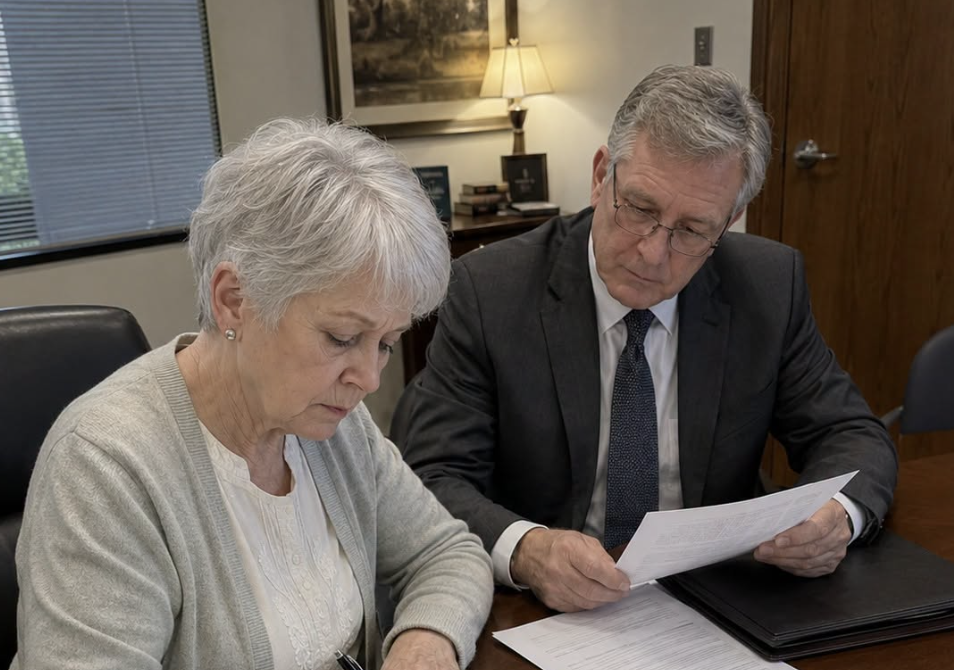
The next morning, I sat across from him in his office.
For nearly two hours, I told him everything.
The missed birthday.
The unanswered calls.
The money.
The excuses.
The kitchen renovation.
The groceries.
The sentence that finally broke something inside me.
“You need to learn to manage on your own.”
Richard listened.
He didn’t tell me what to do.
He simply asked what I wanted.
And I finally knew.
“I don’t want to leave everything to Victoria anymore.”
He nodded.
“What do you want instead?”
I looked down at the documents.
“I want Robert’s name attached to something that helps people.”
I explained my plan.
The house would eventually support scholarships for students who had lost a parent.
Other funds would help older people struggling with food and medical expenses.
The money wouldn’t disappear.
It would simply go somewhere it could continue helping people.
Richard took off his glasses.
“Maggie, once we do this, you need to understand something.”
“I know.”
“Victoria may fight it.”
“I know.”
“She may say you weren’t thinking clearly.”
“I know.”
“She may never forgive you.”
I looked at the papers.
Then I picked up the pen.
“Richard,” I said quietly, “she told me to learn to manage on my own.”
I signed the first page.
“So that’s exactly what I’m doing.”
I didn’t tell Victoria.
I didn’t tell my grandchildren.
I didn’t tell my friends.
I simply went home and continued living my life.
But I didn’t realize how quickly the secret would come back around.
Christmas Eve arrived.
Victoria and Derek came to my house.
They were late.
They stayed less than an hour.
They talked about their plans.
Their children.
Their vacations.
Their expenses.
Everything except me.
As they prepared to leave, Victoria hugged me briefly.
“Take care of yourself, Mom.”
I looked at her.
“I am.”
She smiled.
She had no idea.
Before they reached the door, I stopped her.
“Victoria.”
She turned.
“I changed my will in September.”
Her smile disappeared.
“What?”
“I changed my estate plans.”
Derek turned around.
Victoria stared at me.
“What does that mean?”
“It means the house won’t be yours.”
Silence.
“Mom…”
“My savings won’t be yours either.”
Her face changed.
“You can’t be serious.”
“I am.”
“And the life insurance?”
“Changed.”
“The investments?”
“Changed.”
She looked at me as though I had taken something from her.
Something she already owned.
“But you’re my mother.”
I nodded.
“And you’re my daughter.”
“Then why would you do this?”
I looked at her for a long moment.
“Because you taught me something.”
She didn’t understand.
“You told me I needed to learn how to manage on my own.”
Her eyes filled with tears.
“I didn’t mean it like that.”
“Maybe you didn’t.”
I paused.
“But I heard you.”
That night, Victoria left angry.
Weeks later, she contacted a lawyer.
She claimed I had been manipulated.
She questioned whether I was capable of making my own financial decisions.
She suggested someone had influenced me.
Richard was ready.
He had the meeting records.
The signed documents.
The witnesses.
And a professional evaluation confirming that I understood exactly what I had done.
There was no dramatic courtroom victory.
No judge pounding a gavel.
No revenge speech.
Just evidence.
And eventually, the challenge fell apart.
By spring, something much more meaningful had begun.
The Robert Holloway Memorial Scholarship was officially established.
Three students were selected.
One was a 17-year-old girl from Cleveland who had lost her mother and dreamed of becoming a nurse.
When she hugged me at the ceremony, I thought about Victoria.
And about myself at 41.
A widow.
A mother.
A woman who had spent decades believing that love meant giving until there was nothing left.
I finally understood something.
I hadn’t changed my will because I hated my daughter.
I hadn’t done it to punish her.
I did it because I finally realized that my life belonged to me.
The money Robert and I had spent a lifetime building didn’t have to become a prize waiting at the end of my life.
It could become an opportunity.
A scholarship.
A meal.
Medical assistance.
A second chance.
Victoria and I remained apart for a while.
I stopped chasing the relationship we used to have.
And strangely enough, my life became fuller.
Morning walks.
A library book club.
Volunteering at the hospital.
Watercolor classes.
Lunches with Barbara.
Simple things.
Things I had spent years putting off because someone else always needed something.
I still loved my daughter.
That never changed.
But love no longer meant allowing someone to treat my presence like an obligation while treating my money like an entitlement.
And sometimes, the hardest lesson a parent can learn is that raising a child means eventually letting them live with the consequences of their own choices.
Victoria had told me to learn to manage on my own.
So I did.
And in the process, I discovered something far more valuable than $800,000.
I discovered that I was allowed to choose what my life—and everything I had built—would mean after I was gone.