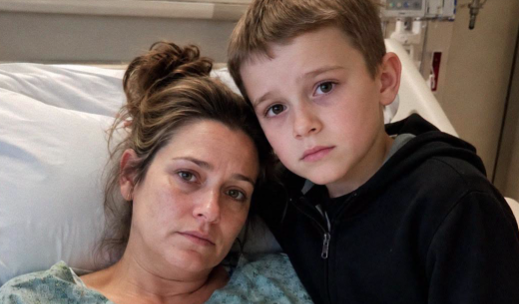
I thought the hardest part of losing my daughter would be learning how to live without her.
I was wrong.
The hardest part came later, when my eight-year-old son began behaving strangely. He started putting every dollar and coin he had into an old glass jar, convinced that if he could save enough money, he could somehow bring his baby sister home.
Then, one quiet afternoon, he told me something I could never have prepared myself to hear.
It forced me to question what had really happened the night everything changed—and what my husband had never told me.
“Mom, she’s not gone.”
My eight-year-old son said it so quietly that, at first, I almost missed him.
I was standing in his bedroom with one hand wrapped around a glass jar filled with money: coins, crumpled dollar bills, and even the $50 Grandma Tracy had given him for his birthday.
For days, I’d watched that jar slowly fill.
That afternoon, I’d caught Willie slipping his lunch money inside.
I looked at him.
“Who’s not gone?”
He stared at me as though I should have already known the answer.
“Claudia.”
My fingers tightened around the jar.
Our daughter had died two weeks earlier.
Willie had spent months talking to my stomach. He had even chosen a stuffed rabbit for her because, in his words, “every little sister needs somebody to sleep next to.”
He had been counting down the days until he could finally meet her.
Then the delivery went wrong.
I still remembered pieces of that night in flashes: Robert squeezing my hand, Tracy pulling Willie away, blood, bright hospital lights, and a mask being lowered over my face.
When I woke up hours later, Robert was sitting beside me with both hands wrapped around mine.
His eyes were swollen from crying.
“Claudia?”
The moment I said her name, his mouth folded inward.
“I’m sorry, Mel.”
I screamed until the pain from my incision became unbearable and someone had to help me breathe.
Claudia hadn’t survived.
And somehow, I had.
For the next two weeks, I barely left my bedroom.
My body constantly reminded me that I’d given birth.
My empty arms reminded me that there was nobody to hold.
Robert cleaned things that were already clean. Tracy quietly took care of the laundry, brought food, and spent afternoons with Willie.
My son became quiet, and I assumed he was grieving.
Now, standing in his bedroom, I realized there was something else happening.
I slowly set the money jar down.
“Honey, I know you miss her.”
“No.”
His face tightened.
“If I save enough, we can get her back.”
My chest tightened.
“Willie, people don’t work like that. You can’t just save money and get someone back. Claudia is with God now.”
He looked at me.
“Then why did Daddy use money?”
For a second, I couldn’t breathe.
“What money, baby?”
His eyes moved toward the bedroom door.
Robert was downstairs. I could hear something scraping against the kitchen sink.
“The money he gave that lady.”
I sat down on the edge of Willie’s bed.
“Start at the beginning.”
He rubbed both hands against his shorts.
“The first night you were sleeping at the hospital, Grandma Tracy went to get coffee. I was trying to sleep on the chair. I was supposed to stay there.”