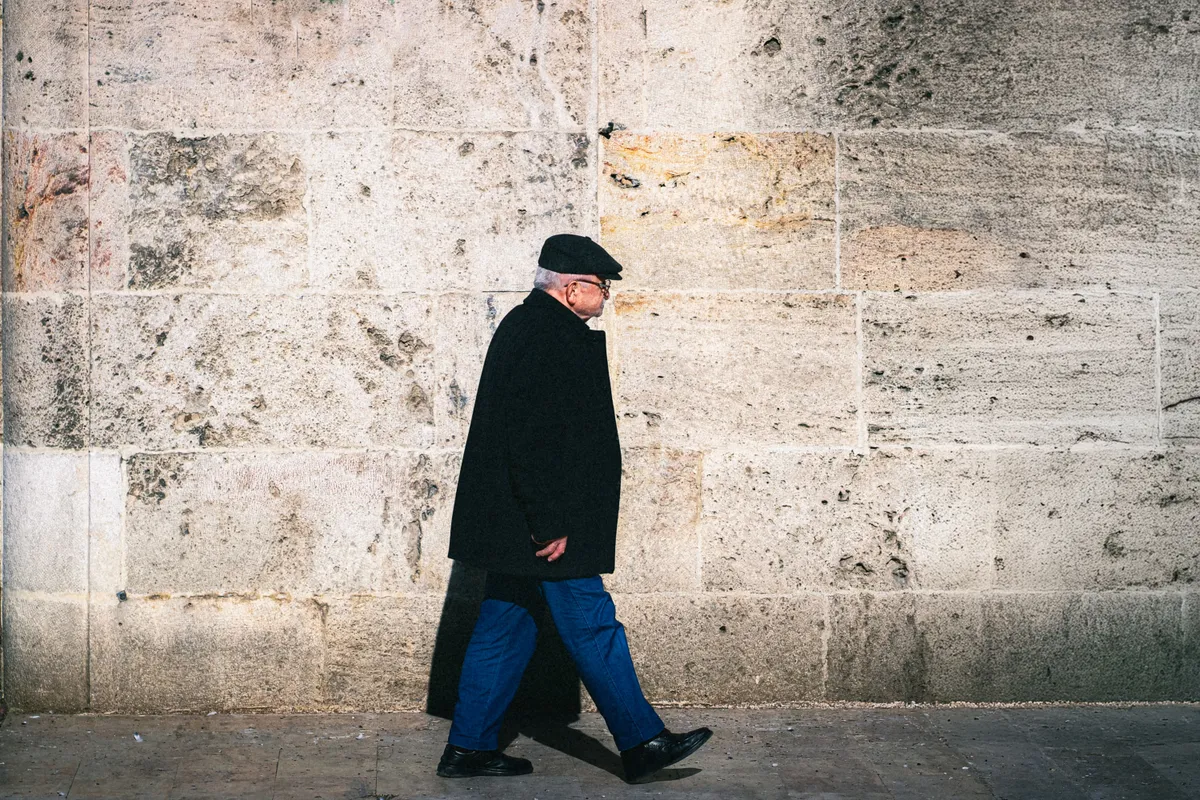
My father was supposed to spend every Thursday playing poker.
At least, that was what I had believed for most of my life.
Then, two weeks after we buried him, I carried his old wool coat into a small dry cleaner across town.
The woman behind the counter saw the coat and reacted as if she had just been handed something belonging to a member of her own family.
“Oh, Mr. Turner’s coat.”
She said it with such tenderness that I immediately knew something was wrong.
Or, more accurately, something was missing from the story I had been told.
Because Thursdays had always belonged to poker.
My father never missed them.
And that was exactly what made what I learned next so difficult to understand.
The house felt wrong without him in it.
Two weeks had passed since we buried my father, but the silence inside his home still felt temporary, as though he might walk through the front door at any moment, toss his keys onto the counter, and complain about the weather.
I stood in his hallway with a garbage bag in one hand and a box of old ties in the other, trying to figure out what I could bear to keep and what I was finally ready to let go.
Everything still smelled like him.
Coffee grounds.
Cedar from the closet.
The faint peppermint he chewed after every meal.
Even the air seemed to remember him.
I opened the hallway closet.
And there it was.
His wool overcoat.
Dark gray.
The collar had been worn soft after thirty winters of the same hand smoothing it flat.
I pulled it from the hanger.
Before I could stop myself, I pressed my face against the shoulder.
“You could have stayed home sometimes,” I whispered into the wool.
The words came out before I even realized I was saying them.
Thursdays.
I had spent my whole childhood resenting Thursdays.
The strange thing was that my father never missed anything else.
He went to my school plays.
He attended parent-teacher conferences.
He made Saturday pancakes.
If I needed him, he was there.
But Thursdays belonged to someone else.
“Your father has his poker night,” my mother used to say.
She always said it with the same tight little smile.
“Men need their friends.”
I believed her.
Even after my mother died, I never questioned it.
It was easier to keep that small grudge than to reopen a door that had been closed for so long.
I carried the coat into the kitchen and laid it across the table.
Then, out of habit, I checked the pockets.
There was a peppermint wrapper.
And a small slip of paper, folded and softened from being handled so many times.
The ink had blurred beyond recognition.
“Of course,” I muttered.
“Something you meant to tell me, probably.”
I turned the scrap toward the light, but there was no way to read it.
I lifted the collar to my nose again.
I expected cigar smoke.
I expected the sour, stale ghost of a card room.