Every Friday at exactly nine in the morning, $550 disappeared from my checking account.
For three years, I made that transfer without hesitation.
At first, I thought of it as one of the most meaningful things I had ever done.
I was finally in a position to give something back to the parents who had raised me.
But by the time my daughter’s birthday arrived, that same weekly transfer had become something entirely different.
It was no longer helping my parents.
It was hurting my own family.
And the words my father said that night made me realize I had been supporting people who did not see us as family in the same way we saw them.
I sent my parents $550 every Friday so they could “live comfortably.”
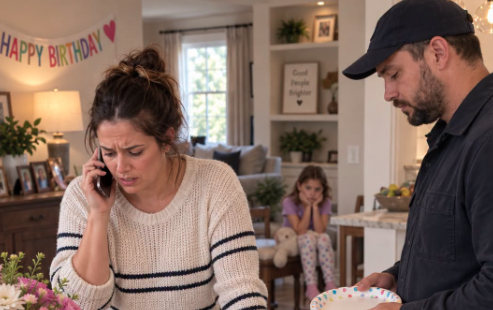
On my daughter’s birthday, they didn’t even show up.
Then my father told me why.
“We don’t count your family the same way.”
That was the moment everything changed.
The first time I arranged the $550 transfer, I cried into my sleeve.
I remember sitting at my computer, entering the banking information and staring at the confirmation screen.
For once, I was the child who could give something back.
My parents had raised me on casseroles, modest living and long speeches about responsibility.
They had always told me that family helped family.
So when Dad’s work hours were cut and Mom told me that the salon business had slowed down, I didn’t hesitate.
I told them I would help.
I set up the automatic transfer.
Every Friday.
$550.
More than $2,000 a month.
I typed the routing number almost like I was saying a prayer.
I never expected to resent it.
Three years later, however, “help” looked very different.
There was duct tape inside my daughter’s sneakers.
Our rent was late again.
Groceries were going onto a credit card.
Marcus, my husband, was coming home from his second job exhausted, his hands cracked and raw from working around cardboard and cold warehouse air.
One night, he sat at the kitchen table and tapped our bank statement with one bandaged finger.