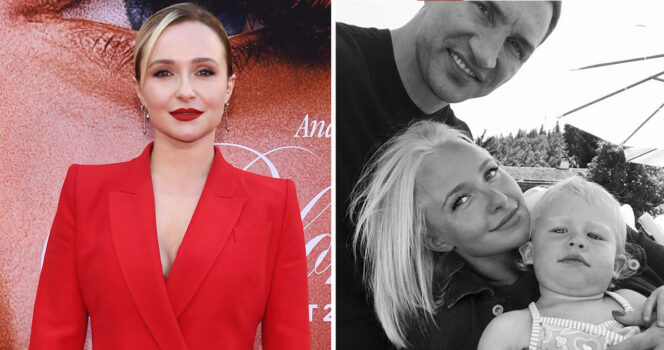
Hayden Panettiere’s death at just 36 has brought renewed attention to one of the most painful chapters of her life: the decision to give full custody of her daughter, Kaya, to her former fiancé, Ukrainian boxing champion Wladimir Klitschko.
Panettiere, who became famous as a child and later rose to international recognition through Heroes, Nashville and the Scream franchise, was a mother long before the public fully understood the private battles she was facing.
Her daughter, Kaya, was born in December 2014. Today, she is 11 years old.
But in the years following Kaya’s birth, Panettiere struggled with postpartum depression, anxiety, addiction and other serious personal challenges. Eventually, she made the heartbreaking decision to allow Klitschko to take full custody of their daughter in 2018 while she focused on getting well.
It was a decision Panettiere later described as one of the most painful experiences of her life.
And she wanted people to understand one thing clearly:
She did not see it as abandoning her daughter. She believed she was doing what was best for Kaya at a time when she was struggling to take care of herself. (Fox News)
A Career That Began When She Was Just a Child
Panettiere entered the entertainment industry remarkably young.
Her first regular acting role came when she was just 4 years old on the American soap opera One Life to Live. From there, she continued appearing in commercials and television productions, gradually becoming a familiar face to American audiences.
One of her early major film roles came in 2000, when she appeared alongside Denzel Washington in Remember the Titans.
But her career changed dramatically several years later.
In 2006, Panettiere became Claire Bennet on the science-fiction television series Heroes. The character—a cheerleader with extraordinary regenerative abilities—quickly became one of the show’s most recognizable figures.
The series ran from 2006 to 2010 and turned Panettiere into an international star.
She later found another major role in Nashville, playing country singer Juliette Barnes. Her performance earned her two Golden Globe nominations for Best Supporting Actress.
By then, Panettiere had spent almost her entire life in front of cameras.
But behind the success was a private struggle that would eventually affect almost every part of her life.
Motherhood Changed Everything
Panettiere welcomed Kaya with Klitschko in 2014.
The birth of her daughter should have been one of the happiest moments of her life.
Instead, Panettiere later revealed that she experienced severe postpartum depression.
Her emotional struggles were followed by problems with alcohol and substance use. She has described turning to substances as a way of trying to escape overwhelming anxiety and emotional pain.
In her memoir, This Is Me: A Reckoning, and in interviews promoting the book, Panettiere spoke openly about what those years were like.
She explained that she felt she had lost herself and was struggling to cope with what was happening internally.
By 2018, the situation had reached a point where Kaya’s stability became the priority.
Klitschko sought full custody of their daughter.
Panettiere ultimately agreed.
The Decision She Described as the Most Painful of Her Life
Years later, Panettiere spoke openly about what it meant to sign the custody papers.
The decision was not something she remembered casually.
It was devastating.
She described signing over full custody as one of the most heartbreaking things she had ever experienced.
At the time, she was trying to get help and rebuild her life. She believed that Kaya needed stability while she worked on her own recovery.
In a 2022 interview with ABC News, Panettiere explained that she intended to focus on getting better and hoped that the custody arrangement could eventually change. She also said the process was not entirely the way she had expected it to unfold. (ABC News)
Years later, she continued trying to correct what she considered a painful misunderstanding.
Some people assumed that giving custody to Kaya’s father meant Panettiere had simply walked away from motherhood.
She strongly rejected that interpretation.
“I Didn’t Just Give Away My Child”
In May 2026, while speaking with Jay Shetty on the On Purpose podcast, Panettiere addressed the issue again.
She explained that the idea people might believe she simply “gave away” her daughter was heartbreaking.
At the time she made the decision, she was dealing with postpartum depression, anxiety, addiction and a profound sense that she had lost control of her own life. (Us Weekly)
She also believed that taking Kaya away from a stable environment while she was still trying to recover could ultimately cause more harm.
In other words, Panettiere’s decision was not about loving her daughter less.
She believed it was about putting Kaya’s needs ahead of her own.
Later, she said that when she saw the support system Kaya had with her father and his family in Europe, she knew her daughter was safe and well cared for. Rather than engage in a highly public custody battle that could disrupt Kaya’s life, she chose to let the arrangement continue. (Fox News)
That choice came at an enormous emotional cost.

“Not Being Under the Same Roof With Her…”
In her memoir, Panettiere described the pain of living apart from her daughter.
She wrote about how difficult it was not to be under the same roof with Kaya every day and how deeply she grieved the fact that motherhood had not unfolded the way she had imagined.
She also described the emotional complexity of missing her daughter while knowing she was safe.
One of the most painful aspects was the feeling that she was not able to be the mother she had always wanted to be.
Yet alongside that pain was enormous love.
Panettiere repeatedly made clear that Kaya was the greatest gift of her life.
She also recognized that her daughter had never asked to be born into fame, public scrutiny or the chaos surrounding her parents’ lives.
That realization shaped one of the most selfless parts of Panettiere’s decision.
She wanted Kaya to have choices.
Especially choices that she herself had not always been given.
She Wanted Kaya to Have a Private Life
Panettiere understood better than most what it meant to grow up in the public eye.
She had been working since childhood.
Her face had appeared on television and in advertisements before she was old enough to understand what celebrity really meant.
As she grew older, she experienced the pressure, expectations and scrutiny that came with being famous.
She did not want the same life forced upon her daughter.
Panettiere said Kaya had not chosen to be born into the spotlight, and she wanted her daughter to have the opportunity to live a more private life.
That included allowing Kaya to grow up in a stable environment with her father and extended family.
It was a painful compromise.
But Panettiere believed it was the right one.
The Mother-Daughter Bond Never Disappeared
Giving up full custody did not mean that Panettiere stopped being Kaya’s mother.
The two remained connected through visits and video calls, and Panettiere spoke about their relationship with enormous affection.
She said their bond remained strong.
In fact, one of the things she wanted to correct was the idea that physical distance meant emotional abandonment.
It did not.
She continued to love Kaya, think about her and remain involved in her life from a distance.
Recent reporting has also described Kaya as having grown up with her father in Europe, surrounded by family and support. (People.com)
For Panettiere, the hardest part was not knowing that her daughter was unsafe.
It was knowing that her daughter was safe and happy somewhere else while she herself desperately wanted to be beside her.
A Pain She Carried for Years
Panettiere’s decision to give up custody did not end the emotional struggle.
She continued to speak about it years later because the pain never completely disappeared.
She described missing the everyday moments of motherhood and the experience of being physically present for her daughter’s childhood.
Yet she also understood that motherhood sometimes means making choices that hurt deeply because they protect the child you love.
That was how Panettiere ultimately viewed her decision.
Not as giving up.
But as stepping back when she believed her daughter needed stability more than anything else.
A Final Chapter That Makes Her Story Even More Complicated
Panettiere’s death has now brought renewed attention to everything she had revealed about her life.
She spent her final months speaking openly about experiences she had previously kept private, including addiction, mental health struggles, motherhood and the difficult years she spent trying to recover.
Her memoir gave her an opportunity to tell her story in her own words.
And among the most emotional parts was her explanation of why Kaya lived with her father.
Panettiere knew that people could judge her.
She knew some would misunderstand.
But she also knew the truth of what she had experienced.
She had been struggling.
She needed help.
And she believed that allowing Kaya to remain in a stable environment was the most responsible choice she could make at that moment.
It was a decision that broke her heart.
But it was also, in her eyes, an act of love.
Her Daughter Will Always Be Part of Her Legacy
Hayden Panettiere’s career will be remembered through the characters she brought to life—from Claire Bennet in Heroes to Juliette Barnes in Nashville and Kirby Reed in the Scream franchise.
But beyond the television screens and movie theaters was another role that mattered to her deeply.
She was Kaya’s mother.
Panettiere once described her daughter as the greatest gift of her life.
She wanted Kaya to grow up with opportunities, stability and the freedom to choose her own path.
And perhaps that is the most heartbreaking part of the story.
Panettiere did not give up custody because she stopped loving her daughter.
She gave it up during one of the most difficult periods of her life because she believed Kaya deserved stability while she fought to find herself again.
She carried the pain of that decision for years.
But she also carried the love.
And whatever people may have assumed about her choice, Panettiere herself was clear about what it meant:
She was not abandoning her daughter. She was trying, in the only way she believed she could at the time, to protect her.
Now, after her sudden death at 36, Kaya is left to grow up with the memory of a mother whose life was complicated, painful, extraordinary—and filled with a love for her daughter that Panettiere never stopped expressing. (theguardian.com)