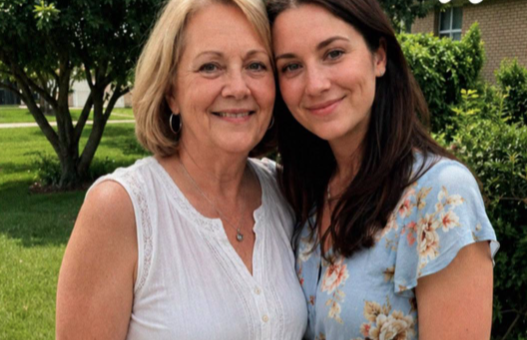
The night before my mother died, she made me promise that my sister would not stand beside her coffin.
At first, I thought fear and medication were speaking for her.
Then, at the funeral, an elderly stranger walked into the chapel, handed me a sealed envelope and told me my mother had been waiting for that moment.
What I learned inside that envelope changed everything I thought I knew about my family.
My mother, Evelyn, had always had a way of becoming the center of a room without ever demanding attention.
After my father left, she worked two jobs, raised Claire and me, and somehow made our cramped little house feel steady, warm and safe despite everything we were missing.
Claire was four years younger than I was.
She was fearless in ways I had never been.
After college, she moved across the country, built a successful career, bought an apartment and called home just often enough for Mom to defend her absence.
“She’s busy,” Mom would say whenever Claire canceled a visit.
“You know how demanding her work is.”
I knew.
I also knew Mom kept clean sheets on Claire’s bed and fresh milk in the refrigerator whenever Claire mentioned that she might come home.
I tried not to resent her.
Sometimes I succeeded.
Other times, I didn’t.
Then Mom got sick.
Our world narrowed almost overnight.
There were pills, doctor’s appointments, soft foods, insurance calls and long nights beside her bed.
I moved back into the old house to take care of her.
Claire called from airports, offices and hotel rooms.
She always promised she would visit soon.
But somehow, she never arrived.
I tried not to resent her.
Some days, I managed.
Other days, while changing Mom’s sheets or arguing with the insurance company, I wanted to throw my phone against the wall every time Claire texted:
“Tell Mom I love her so much, please.”
Mom never complained.
Even near the end, she protected Claire.
She never criticized her.
Instead, she asked whether Claire sounded tired.
I thought I understood my mother’s behavior.
I thought she was simply trying to protect her youngest daughter.
Then came the night before she died.
Mom was lying in bed.
Her breathing was shallow, and she had barely spoken all day.
I was adjusting her blanket when she suddenly grabbed my wrist.
The strength in her fingers shocked me.
She pulled me closer.
Her eyes were wide.
Frightened.
But completely clear.
“Promise me Claire will not stand beside my coffin,” she whispered.
I froze.
“Mom, what are you talking about?”
Her fingers tightened around my wrist.
“Claire is your daughter.”
I didn’t even know why I said it.
Maybe I was trying to remind her that Claire was her child.
Maybe I was trying to convince myself that whatever she was saying couldn’t possibly make sense.
Mom shook her head.
“Please.”
Her voice was barely more than a whisper.
“Keep her away from me.”
Those were the last clear words she ever said.
By sunrise, she was gone.
Grief made everything mechanical.
I called hospice.
I signed forms.
I chose flowers.
I answered relatives.
I stared at Claire’s flight details on my phone.
But I never told her what Mom had asked me.
I couldn’t.
I didn’t understand it myself.
The funeral chapel smelled of lilies and furniture polish.
Claire arrived wearing black.
She was crying so hard she could barely breathe.
She wrapped both arms around me.
“I should have come sooner,” she whispered.
I wanted to answer honestly.
But I couldn’t.
Mom’s final request was still sitting inside me like a stone.
When Claire approached the coffin, my body went rigid.
For a moment, I almost stopped her.
Then I looked at her face.
She didn’t look dangerous.
She looked devastated.
She rested one hand on the polished edge of the coffin and whispered something only Mom could hear anymore.
