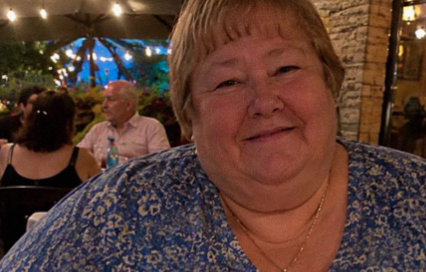
I only wanted my mother to enjoy one birthday dinner without feeling watched, judged, or ashamed.
That shouldn’t have been too much to ask.
But for years, restaurants had become places where my mom felt like she had to defend her right to simply sit down, order food, and enjoy a meal like everyone else.
Then, on her 65th birthday, one stranger’s cruel comment nearly ruined the evening.
What happened next, however, was something neither of us could have expected.
Because just moments after the woman mocked my mother’s weight loudly enough for half the restaurant to hear, the kitchen doors swung open.
The head chef walked straight toward us.
And when he saw my mother, his entire expression changed.
My mom hadn’t been out to dinner in months.
That fact had started bothering me more than I wanted to admit.
Molly had always loved going out.
When I was younger, she could turn an ordinary dinner into an event.
She studied menus as if they contained state secrets. She insisted everyone taste whatever she ordered. Somehow, before dessert even arrived, she would have a friendly conversation going with the server.
Dinner was never just dinner with my mom.
It was an experience.
But somewhere along the way, restaurants stopped feeling safe for her.
It wasn’t because she stopped loving food.
It wasn’t because she suddenly disliked being around people.
It was because too many people stopped minding their own business.
Over the years, strangers had made cruel comments about her weight.
Some whispered to each other, apparently assuming she couldn’t hear.
Others stared at her plate.
A few were bold enough to say things directly to her.
Every incident took something from her.
Little by little, the woman who had once loved going out to dinner became someone who found reasons to stay home.
Eventually, invitations became excuses.
“I’m tired tonight.”
“My stomach’s a little off.”
“Why don’t we just order something?”
I knew what those excuses really meant.
She was protecting herself.
So when her 65th birthday approached, I decided I wasn’t going to let another year pass with my mother celebrating at home because strangers had taught her to feel ashamed of taking up space.
I called her a week before her birthday.
“I’m taking you to dinner for your birthday.”
There was a pause.
“Daphne.”
“I know that tone.”
“I’m perfectly happy eating at home.”
“That’s not the point.”
She sighed.
I could picture her sitting at her kitchen table, probably turning her coffee mug between both hands.
“Restaurants are exhausting.”
“Not this one.”
I’d already chosen her favorite little Italian restaurant.
It wasn’t fancy.
That was part of why I chose it.
It was warm, comfortable, and familiar. The dining room was small, with yellow lights, old photographs on the walls, and tables close enough together to make the place feel busy without becoming overwhelming.
Mom had loved it years earlier.
Eventually, she gave in.
“Fine,” she said. “But you are not telling them it’s my birthday.”
“I make no promises.”
“Daphne.”
“Fine. No singing.”
That finally got a laugh out of her.
And for me, that laugh felt like a small victory.
On the night of her birthday, I picked her up myself.
When Molly opened her front door, I almost didn’t recognize the nervousness hidden underneath her smile.
She had dressed carefully.
Dark pants.
A soft blue blouse.
A silver necklace.
And the earrings my father had bought her years earlier.
“You look beautiful,” I told her.
She immediately looked down at herself.
“You have to say that.”
“No, I don’t.”
“You’re my daughter.”
“Exactly. I’ve had decades of practice telling you when you’re being ridiculous.”
She laughed again.
That was the version of my mother I wanted back.
The woman who could laugh without checking who was watching.
The woman who could enjoy herself without worrying about whether someone might judge her.
When we arrived at the restaurant, it was busy but not chaotic.
Plates clinked in the background.
Someone near the bar was laughing.
The smell of garlic, tomatoes, fresh bread, and herbs filled the air.
Mom paused for half a second at the entrance.
I noticed.
She noticed that I noticed.
Then she lifted her chin.
“Well,” she said, “I’m 65. I’m too old to be scared of pasta.”
I smiled.
“That’s the spirit.”
For the first hour, everything was perfect.
Mom laughed.
Not the polite little laugh she’d learned to use over the years.
A real laugh.
The kind that came from somewhere deep.
She told me a story about an old coworker who had once accidentally sent a complaint about their manager directly to the manager himself.
She stole a piece of bread from my plate even though an entire basket sat between us.
Then she did something that genuinely surprised me.
She ordered tiramisu before dinner.
The waiter blinked.
“Before your entree?”
Mom grinned.
“That’s what birthdays are for.”
I raised my glass.
“Now you’re making sense.”
When the tiramisu arrived, she took the first bite and closed her eyes.
“Still good?” I asked.
She nodded solemnly.
“Possibly better than I remember.”
For a while, I forgot why getting her through those restaurant doors had felt like such a major accomplishment.
She looked comfortable.
She looked relaxed.
She looked like herself again.
At one point, she leaned back in her chair and glanced around the room.
Then she said something that made my heart tighten.
“Maybe I should do this more often.”
I didn’t want to make too much of it.
If I reacted too strongly, she might realize just how worried I’d been about her.
So I simply smiled.
“I know a daughter who would support that decision.”
She pointed her fork at me.
“An expensive daughter.”
“A devoted daughter.”
“Those aren’t mutually exclusive.”
We both laughed.
And that’s when I noticed the woman at the next table.
She had been there for most of the evening, but I hadn’t paid much attention to her.
Now she was staring at my mother.
Not glancing.
Staring.
Her eyes moved slowly from Molly’s face to the dessert plate and then back again.
My stomach tightened.
I knew that look.
I’d seen it before.
Mom hadn’t noticed yet.
I hoped she wouldn’t.
Then the woman looked my mother up and down.
And, loud enough for half the restaurant to hear, she said:
“Maybe skip dessert this time.”
The room fell silent.
It happened so quickly that my brain seemed to need a second to catch up.
A fork stopped halfway to someone’s mouth.
A waiter near the wall froze.
Even the conversation around the bar seemed to disappear.
But the thing that hurt me most wasn’t the woman’s comment.
It was what happened to my mother.
Her smile disappeared instantly.
One second earlier, she’d been laughing.
The next, she looked smaller.
She quietly reached for her purse.
“I think we should go.”
Anger hit me so hard that my hands started shaking.
This was exactly why she hadn’t wanted to come.
Exactly why she’d spent months turning down invitations.
Exactly why I’d spent a week convincing her that this dinner would be different.
Before I could answer, the woman laughed again.
“You’ll thank me later.”
I stood.
“So bullying strangers is your hobby?”
Mom touched my wrist.
“Daphne.”
But I couldn’t sit there and watch her retreat again.
Not after everything.
The woman simply rolled her eyes.
“Someone has to tell the truth.”
I stared at her.
There were dozens of things I wanted to say.
None of them felt big enough.
Then there was a sudden crash of movement behind us.
The swinging kitchen doors burst open.
The head chef himself walked into the dining room.
I knew his name was Alaric because I’d seen it printed on the restaurant’s menu.
He wasn’t carrying food.
He wasn’t smiling.
He walked straight past the other tables.
Then he stopped beside my mother.
For a moment, nobody spoke.
His face had gone pale.
Without taking his eyes off the woman who had insulted my mother, he quietly said: