Twenty-six years ago, I gave my last $10 to a homeless young man sitting alone on a sidewalk. I never expected to see him again, and I certainly never imagined that a simple act of kindness would one day bring a stranger to my door with a box that would change everything I thought I knew about my son.
But in 2026, a lawyer appeared at my house carrying that box.
His words were brief, almost unsettling.
“He made sure you got what you deserve.”
I had no idea what he meant. All I knew was that, after more than two decades, someone I had nearly forgotten had finally found me.
And what I discovered inside that box would lead me to a part of my son’s life I had never known existed.
Twenty-six years had passed since Daniel died, but September 30 still had a way of making the air feel heavier.
Grief has a strange way of becoming part of your life. At first, it feels impossible to survive. Eventually, you learn how to live around it. You find reasons to get out of bed, routines to keep you moving, and moments of happiness that remind you the world hasn’t stopped turning.
I had learned to do all of that.
I had a husband who loved me, a daughter who called more often than necessary just to make sure I was doing all right, and a home that usually felt warm and full.
Yet there were days when the absence of my son was louder than anything else in the house.
September 30 was one of those days.
I was in the kitchen when the doorbell rang.
“Miss Nora?”
I wiped my hands and walked to the front door.
A man in an expensive suit stood on my porch. He looked to be in his forties or fifties and carried a large box in both hands.
“Yes?” I answered cautiously.
“I’m Owen’s attorney,” he said. “He’s been looking for you for years.”
For a moment, the name meant nothing to me.
Owen.
I repeated it silently, searching my memory for a familiar face or some forgotten connection.
Then I looked at the box.
And suddenly, I was no longer standing in my doorway in 2026.
I was back on a sidewalk in 2000, carrying the weight of a grief so enormous that I could barely put one foot in front of the other.
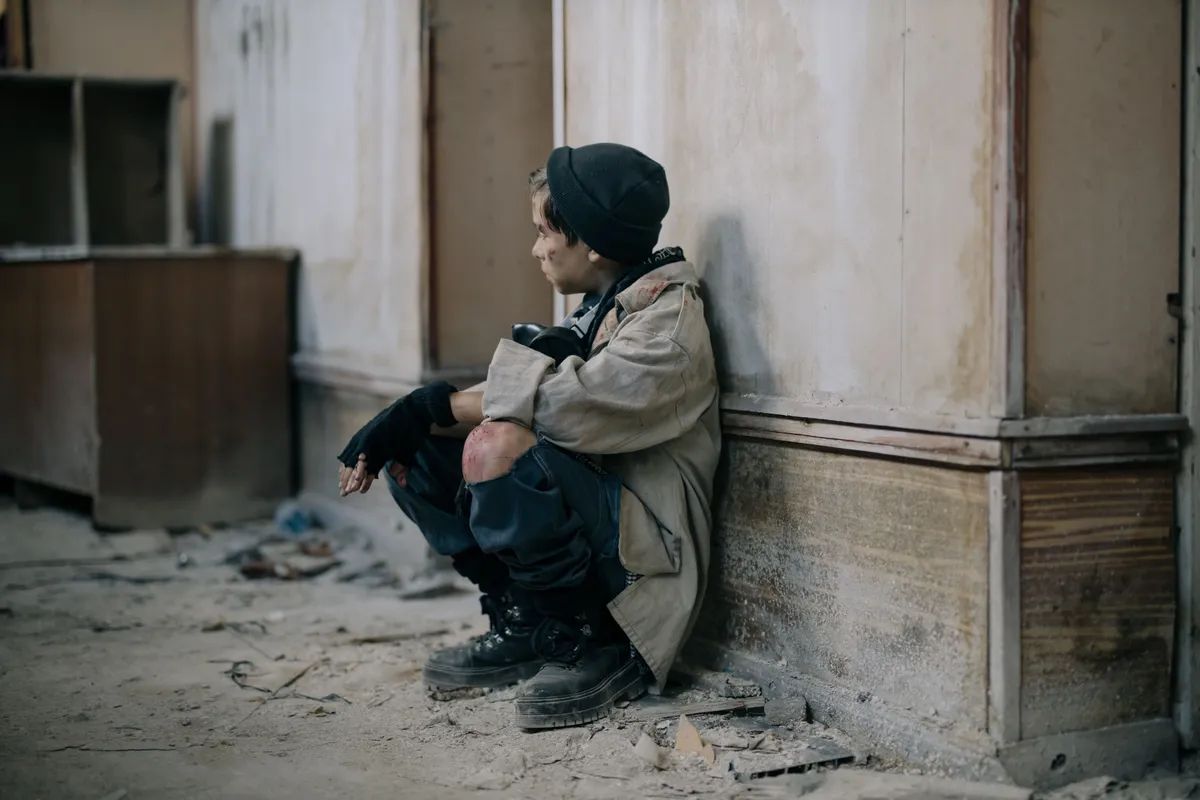
That afternoon, I had been walking home in tears when I noticed a young man sitting on the pavement. He couldn’t have been more than a few years older than Daniel had been when I lost him.
I nearly walked past.
I had nothing left to give anyone. I was barely holding myself together, and all I wanted was to get home without having to explain to another person why my eyes were swollen or why I looked as though the world had ended.
Then something made me stop.
It was his jacket.
A small red sailboat had been stitched over the pocket.
I knew that jacket.
I had sewn that patch myself when Daniel was thirteen, carefully covering a tear in the fabric. I could still remember him standing impatiently beside me, asking whether I was finished because he wanted to go outside.
A month before he became seriously ill, Daniel had donated the jacket to our church thrift shop.
Now it was hanging from the shoulders of a stranger.
“Where did you get that?” I asked.
The young man looked up. The color drained from his face.
“They gave it to me,” he said quickly. “I can take it back.”
He seemed frightened, as though I had caught him doing something wrong.
“No, sweetheart,” I told him gently. “It looks good on you.”
“I can take it back.”
But I wasn’t angry.
I was suddenly overwhelmed by the memory of my son, and the sight of that familiar patch had opened a door inside me that I had spent weeks trying to keep closed.
Instead of walking away, I sat down beside him.
And I cried.
I told a complete stranger about Daniel. I told him how sick my son had been, how much I missed him, and how often I still caught myself wanting to tell him something that had happened during the day.
I told him about the little things that grief made unbearable: the empty spaces at the table, the silence in the house, and the instinct to reach for the phone before remembering there was no one left to call.
The young man listened.
He didn’t interrupt or offer meaningless words about everything happening for a reason. He simply sat there while I talked, allowing me to be a grieving mother without asking me to make my sadness easier for him to witness.
Eventually, I stood up.
I reached into my pocket and pulled out the last $10 I had.
I held it toward him.
“No, ma’am,” he said immediately. “You need that more than I do.”
“Maybe I do,” I answered. “But you need supper tonight. I’ll manage.”
He stared at the money for a moment before wiping his eyes with his sleeve.
“I’m Owen,” he said.
“I’m Nora.”
He repeated my name quietly, as though he wanted to remember every syllable.
Then he wrote it on a torn bus schedule and promised that one day, he would find me again.
I never expected him to keep that promise.
I never imagined he would even remember my face.
But standing in my doorway twenty-six years later, with a lawyer holding a box and speaking Owen’s name, I suddenly remembered everything.