The first Saturday after Theresa died, her grass kept growing, her porch stayed empty, and no kettle sang through the open kitchen window.
For eight years, that had never happened.
Then her attorney placed a sealed envelope in my hand, and something small and heavy shifted inside.
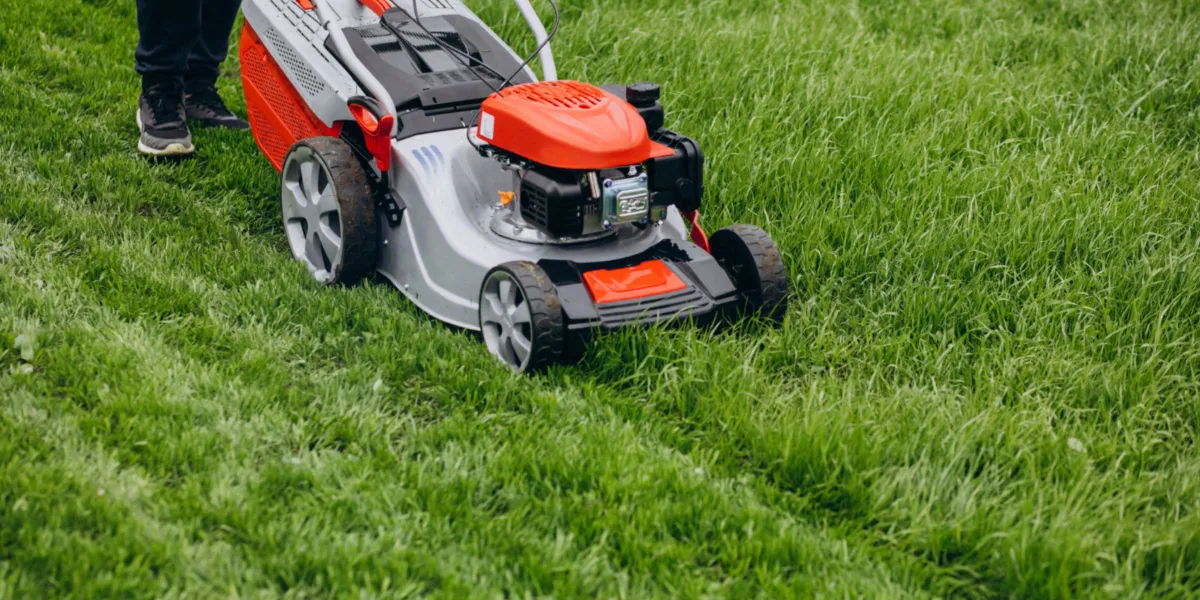
I stood in the driveway with both hands wrapped around the red handle of my lawn mower when the realization hit me with a sudden, sickening weight.
Theresa’s yard wasn’t my responsibility anymore.
There was nowhere left for me to push the mower.
Across the narrow strip of driveway, her porch swing hung perfectly still.
No floral apron.
No chipped blue teapot.
No voice calling from the kitchen:
“Don’t you dare start without breakfast.”
Behind me, the screen door opened.
My daughter, Fanny, stepped onto the porch in purple pajamas. At eight years old, she had already learned to recognize the moments when adults needed gentle voices.
“Dad,” she said, “are you still forgetting?”
I looked toward Theresa’s lawn.
The grass was only a little too tall. A few yellow dandelions had opened near the mailbox. Her flower beds waited beneath the morning sun as if someone might come outside at any moment and apologize for being late.
“Sometimes, sweetie,” I said.
Fanny came down one step.
“Especially on Saturdays?”
I nodded.
She understood.
Eight years earlier, Theresa had moved into the house next door carrying three cardboard boxes, one green suitcase, and a framed photograph pressed carefully against her chest.
She was seventy-four then.
Her husband, Harold, had died that spring.
I didn’t know much about her at first.
I knew she wore gardening gloves with tiny strawberries on them.
I knew she planted sunflowers along the back fence.
And I knew she smiled whenever anyone passed, then somehow found one more question to keep them standing there.
“How are the children?”
“Did Olive like the tomatoes?”
“Are you still working too much?”
It took me a while to understand that she was stretching those conversations because the house behind her had no one inside waiting to continue them.
One Saturday morning, I heard an engine coughing next door.
Theresa was pushing an old lawn mower through grass that reached halfway up her ankles.
The machine bucked every few feet.
She leaned her whole weight into the handle.
I crossed the driveway.
“Let me finish that,” I said.
She straightened and wiped her forehead with the back of one glove.
“I am perfectly capable, dear.”
The mower died between us.
Theresa stared at it.
Then she sighed.
“I am capable of recognizing bad timing!”
I laughed and took the handle.
When I finished, she came outside holding folded bills.
“I am perfectly capable, dear,” she repeated.
“I know.”
“You worked for nearly an hour, Justin.”
“I live ten steps away,” I said, shrugging. “I don’t want your money.”
She studied me for a moment, then tucked the bills into her apron.
“Fine. Then let an old woman thank you properly.”
That was how I ended up on her porch with sweet tea and a slice of apple pie large enough to qualify as construction material.
We talked for almost two hours.
She told me Harold had whistled while fixing things, even when he had no idea what he was doing.
She told me they had spent forty-six years arguing about whether cinnamon belonged in coffee.