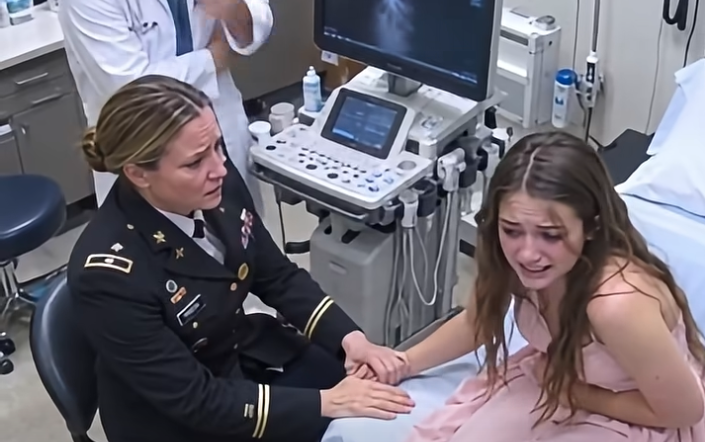
I will never forget the moment my fifteen-year-old daughter looked at me and whispered, “I stopped telling Dad because he never believes me.”
Less than twenty-four hours later, I secretly picked her up from school and drove her straight to the hospital without telling my husband.
I knew I was taking a risk by going behind his back.
But by then, I was more afraid of what would happen if I didn’t.
Before the doctors had even finished examining Madison, something changed in one physician’s expression.
He stopped mid-sentence.
His face lost its color.
The room suddenly became quiet.
And in that terrifying silence, I realized the nightmare I had feared all along was only beginning.
For weeks, I had watched my daughter become a shadow of herself while my husband insisted she was exaggerating.
I thought I had already lost the battle to convince him that something was wrong.
What I didn’t know was that I was carrying a decision that would change everything.
And what happened next would leave our family shattered in ways I never could have imagined.
I knew something was terribly wrong with Madison long before anyone else in our house was willing to admit it.
At first, the signs were easy to dismiss.
Every afternoon, she would come home from school, drop her backpack beside the front door and disappear into her bedroom without touching dinner.
She complained about feeling nauseated almost every day.
Sometimes, she would quietly rub the lower part of her stomach as though she were trying to make the pain disappear.
At night, I would peek into her bedroom and find her curled beneath the blankets in complete darkness.
Homework that had once been effortless suddenly seemed impossible.
Books remained open beside her, untouched.
Assignments piled up.
Her energy disappeared.
And so did the girl I knew.
Madison had always been bright and energetic.
She filled our home with music.
She raced from one soccer practice to another.
She took her camera outside to photograph sunsets and clouds and anything else she found beautiful.
She laughed loudly with her friends, the kind of laugh that made everyone nearby smile without even knowing what the joke was.
Watching that vibrant teenager slowly become quiet and withdrawn felt like losing her piece by piece while she was still standing right in front of me.
After two weeks, I finally told my husband we needed to take her to the doctor.
He barely looked up from his phone.
“It’s probably just a stomach virus.”
I stared at him.
“She’s been sick for two weeks.”
“She’ll be fine.”
Another week passed.
Nothing changed.
If anything, Madison looked worse.
I brought it up again while my husband sat at the kitchen table with his coffee.
He sighed and put his mug down.
“Sarah, she’s fifteen.”
He looked at me as though I were making a problem out of nothing.
“Teenagers stay up all night, eat junk, live on their phones and then complain they don’t feel good.”
