Three months after I threw my alcoholic husband out of our house, he came back sober, crying, and suspiciously useful.
For thirteen days, he fixed everything I’d begged him to touch for ten years.
He repaired leaking pipes. He fixed bicycles. He built the bunk beds I’d ordered eight months earlier. He cleaned gutters, organized the garage, repaired the fence, cooked dinner, helped the children with homework, and even remembered to bring me my favorite flowers.
For thirteen days, I watched my husband become the man I’d spent years begging him to be.
And slowly, dangerously, I started to believe him.
Then I found a letter hidden inside his jacket.
That’s when I discovered that every apology had come with paperwork attached.
And one of those papers involved a very expensive favor.
People assume I threw my husband out because he drank.
That wasn’t the real reason.
I threw him out because one day I realized my children had started making excuses for him before I could.
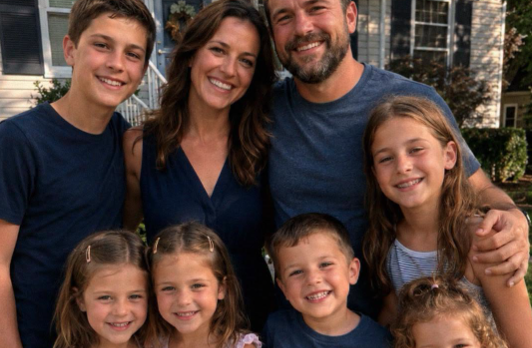
My name is Marlene. I’m 38 years old, and I’m raising six children who deserve better than learning to measure their father’s love by whether he came home sober.
Danny wasn’t a bad man.
That was what made everything so difficult.
He was the man everyone in town called when their truck wouldn’t start.
He coached Little League whenever another parent couldn’t make it.
He carried groceries for elderly neighbors without being asked.
If somebody needed help, Danny was usually the first person to show up.
Then he’d stop somewhere on the way home for “one drink.”
One became six.
Six became another broken promise.
And another broken promise became another morning when I had to explain to our children why their father couldn’t be counted on.
For years, I convinced myself that the good Danny outweighed the drinking Danny.
Until Molly’s school concert.
She was nine years old and had one violin solo.
Danny promised he’d be there.
“I’ll be the loudest one clapping,” he told her.
She smiled for the rest of the day because of that sentence.
During the concert, Molly kept looking toward the auditorium doors.
Every time they opened, hope crossed her face.
Every time another parent walked through instead, that hope disappeared.
I watched it happen again and again.
When we finally got home, Danny was asleep on the porch swing.
An empty whiskey bottle sat underneath his boot.
Molly stared at him.
Then she looked at me.
“Maybe he forgot what day it was.”
That was the moment everything changed.
She wasn’t angry.
She was protecting herself from disappointment.
A nine-year-old child shouldn’t have to do that.
That night, after all the children had gone to bed, I packed Danny’s clothes into two duffel bags.
He woke up just as I carried them outside.
“What are you doing, Marly?”
“You can’t live here anymore.”
His face drained.
“Marlene…”
“I changed the locks this afternoon.”
He looked past me toward the hallway.
“I’ll quit,” he said. “I promise.”
“You’ve quit twenty-three times.”
He stared at me.
“You counted?”
“I stopped after twenty-three.”
The next morning, I filed for divorce.
The first week without Danny felt strange.
Not terrible.
Just strange.
Nobody froze when headlights turned into the driveway.
Nobody whispered, “Go see if Dad’s okay.”
The twins argued over cereal.
Jacob complained about homework.
The house was noisy.
Messy.
Exhausting.
But wonderfully ordinary.
For the first time in years, ordinary felt like peace.
Then, three months later, someone knocked on my front door.
Three slow knocks.
I didn’t need to look through the window.
I already knew who it was.
When I opened the door, Danny stood there drenched from the rain.
Before I could say anything, he burst into tears.
“I’ve been sober eighty-nine days, Marly.”
I waited.
“I finished rehab,” he said. “I know I don’t deserve anything.”
“Why are you here, Danny?”
“I wanted to see the kids.”
“And?”
He wiped his face.
“I was hoping you’d let me stay one night.”
I folded my arms.
“You don’t get rewarded for getting sober.”
“Please.”
“You don’t get to erase ten years.”
“I know.”
He looked down.
“I’m sorry.”
I studied him.
“One night,” I finally said.
Before Danny could respond, Micah appeared behind me.
“Dad?”
Danny looked up.
“Hey, buddy.”
Micah studied his father carefully.
“You still… drinking?”
Danny’s eyes filled.
“No, buddy.”
He swallowed.
“No.”
“For real?”
“For real.”
Micah nodded once.
“Good.”
Then he walked back toward the living room as if he’d simply asked what the weather was going to be like.