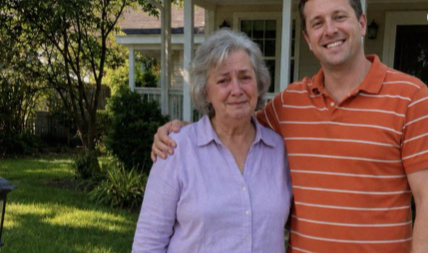
I spent my life making sure my son never had to struggle the way I did.
So when he showed up at my door after months away, carrying an overnight bag and wearing the uncertain smile of a man who had suddenly remembered where home was, I thought he had finally come back because he missed me.
I was wrong.
Thirty years earlier, I had made a promise to that same boy.
I would make sure he never lost his future simply because we had lost his father.
I kept that promise.
For decades.
What I didn’t know was that one day, the future I had sacrificed everything to build for him would become the reason he tried to take my home away.
I became a single mother when Jason was three.
His father, Daniel, died in a highway accident on his way home from work.
One minute, I was standing in my kitchen complaining about a leaking faucet.
The next, a police officer was standing on my porch, holding his hat against his chest.
Jason stood behind me in his dinosaur pajamas.
He looked up at the officer, then at me.
“Why does the man look sad?” he asked.
I had no answer.
That night, Jason slept against my ribs while I stared at the ceiling.
I could still hear the officer’s voice.
I could still see the expression on his face.
And I knew that our lives had changed forever.
So I made my promise.
He would never lose his future just because we had lost Daniel.
I meant every word.
In practice, that promise meant working two jobs.
I opened the bakery at five every morning.
Then, after closing, I cleaned offices until midnight.
It meant skipping vacations.
It meant wearing the same winter coat for nine years because Jason needed braces, then a laptop, then tuition money.
It meant learning how to stretch one paycheck across an entire month.
It meant saying no to myself so many times that eventually I stopped noticing what I wanted.
But Jason grew into the kind of boy who carried groceries for older neighbors.
He called when he was going to be late.
He helped people without being asked.
On graduation day, he hugged me so tightly that his cap slipped sideways.
“We did it,” he whispered.
I smiled through my tears.
“You did it.”
“No,” he said. “We did.”
I kept those words with me for years.
When Jason moved to Bellford for work, I helped pack his car.
I smiled until he turned the corner.
Then I stood in the driveway long after he was gone.
His calls became shorter.
Visits happened on holidays.
Then every other holiday.
Jason became a project manager.
He bought tailored shirts.
He started using words like “equity” and “leverage.”
Every promotion felt like proof that the difficult years had mattered.
I missed him.
But I remained proud.
He married Emily, a warm woman who sent handwritten thank-you notes and remembered my birthday without reminders.
They lived in a small apartment near downtown, where rent seemed to rise every year.
“We are saving,” Emily told me over dinner one Christmas.
“Slowly, but we are.”
Jason stared at his plate.
“You will get there,” I told him.
He looked toward my dining room.
Then past it, toward the staircase.
I noticed.
But I said nothing.
My house wasn’t grand.
It had three bedrooms, chipped blue siding and a porch Daniel had rebuilt twice because the first version leaned.
But it was our home.
Every room held a memory.
The kitchen where Jason had done his homework.
The hallway where his height was marked in pencil.
The dining room where Daniel had once carved a turkey badly enough that we ate sandwiches instead.
The workshop where Daniel kept his tools.
The backyard where he planted an apple tree.
But families priced out of Bellford had begun moving into our town.
Property values climbed.
Developers started sending letters to longtime homeowners.
My house suddenly became worth far more than it had been when Daniel and I bought it.