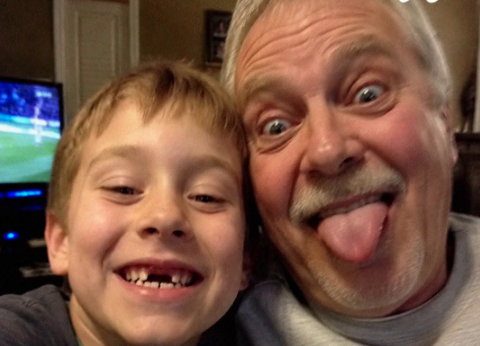
At 62, I thought my chance to become a father had passed.
I had made peace with that years earlier.
Or at least, I had convinced myself that I had.
My wife had died 12 years ago, and we’d never had children together.
For a long time after she was gone, the house felt impossibly large for one person.
Every room seemed to hold some reminder of the life we’d built.
Her favorite mug remained in the kitchen cabinet.
A framed photograph of us sat on the hallway table.
I even kept the old wooden chair she used to complain about because it hurt her back.
There were days when I would walk through the house and almost expect to hear her voice from another room.
Eventually, the grief became quieter.
It never disappeared.
I simply learned how to carry it.
My days settled into a predictable rhythm.
I woke early.
I made coffee.
I read the newspaper.
I fixed whatever needed fixing around the house.
I knew most of my neighbors and had friends I saw from time to time.
But every evening ended the same way.
I came home to silence.
Then I met seven-year-old Noah.
I first saw him in a small office at the adoption agency.
He was sitting in a chair that seemed much too large for his little body, holding a blue crayon between his fingers.
He didn’t look at me.
He simply kept drawing.
The caseworker sat across from me with a folder open on her lap.
She had already explained some of Noah’s history before bringing him into the room.
Fourteen families had considered adopting him.
Fourteen families had eventually said no.
I remember staring at that number on the page.
Fourteen.
I knew there would be challenges.
I understood that older children in the system often carried experiences adults couldn’t immediately see.
But fourteen families felt like more than a series of disappointments.
It felt like a warning.
Noah hadn’t spoken a single word in nearly three years.
Doctors couldn’t find a physical reason for his silence.
“He understands everything,” the caseworker explained. “He just… doesn’t speak.”
I looked at Noah again.
There was nothing vacant about his expression.
His eyes moved whenever someone shifted in the room.
When the caseworker said his name, his shoulders tightened slightly.
He heard us.
He understood us.
He simply refused—or perhaps couldn’t bring himself—to answer.
“What happened three years ago?” I asked quietly.
The caseworker hesitated.
“There are things in his history that we’re still trying to understand.”
I didn’t push.
Something about that boy stayed with me.
Maybe it was the way he seemed to make himself smaller whenever someone came too close.
Maybe it was the fact that he never asked anything from me.
Or maybe I recognized something in his silence.
I had spent 12 years living with words I could no longer say to the person I wanted to hear them.
Noah had his own reasons for being quiet.
I didn’t know what they were.
But I knew what silence could do to a person.
So I signed the papers.
People in my life had questions.
Some tried to hide their concern.
Others didn’t bother.
“Edward, you’re 62,” one friend told me. “A seven-year-old is a lot of responsibility.”