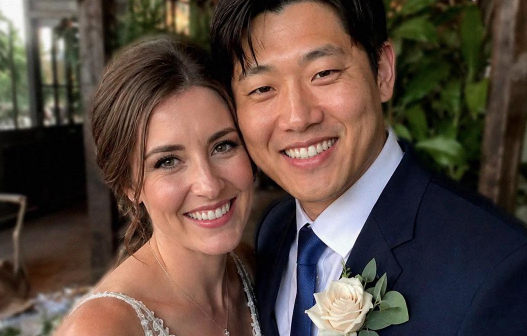
I had crossed an ocean because I missed my daughter and wanted to understand the life she’d built without me.
I thought the hardest part of the trip would be the distance.
I was wrong.
During one family dinner in South Korea, I overheard a conversation I was never supposed to understand. A hidden truth came to light, and suddenly I was forced to question my daughter’s marriage, my own instincts, and even the reasons I’d wanted her to come home.
It started with a single sentence.
“You know why you married her.”
The knife stopped halfway through a cucumber.
I stood in my daughter’s kitchen in South Korea, one hand resting on the cutting board, listening to my son-in-law and his father argue in Korean in the next room.
Joon, my son-in-law, answered first.
“I love Emily.”
“I didn’t say you don’t,” his father, Young-ho, replied.
My stomach tightened.
Neither man knew I understood what they were saying.
For nine months, I’d been quietly learning Korean on my phone.
I was 60 years old, stubborn enough to maintain a daily language-learning streak, and tired of smiling politely through conversations I couldn’t understand.
Emily had built a life in Korea.
I wanted to understand more of it.
I just never expected that understanding more would mean hearing something I desperately wished I hadn’t.
Young-ho’s voice became sharper.
“How much longer are you going to hide this from Emily?”
“I haven’t decided anything yet.”
“You’re interviewing for jobs in the United States.”
My fingers curled around the edge of the counter.
Joon lowered his voice.
“That doesn’t mean I’m leaving.”
“You said the same kind of thing when you married her.”
“Don’t start, Dad.”
“You knew exactly what she represented to you, Joon!”
“I said I love my wife.”
“And I said that isn’t the point. That girl has uprooted her entire life for you, and you can’t even tell her the truth.”
A chair scraped across the floor.
Young-ho continued.
“You wanted a way out of the life I planned for you. Emily made another life seem possible.”
“I wanted my own future.”
“And now you’re doing the same thing to her.”
“Stay out of my marriage.”
“Then stop making decisions for your wife without asking her.”
I set the knife down before I dropped it.
“Stay out of my marriage.”
And suddenly, the entire trip felt different.
Twenty-four hours earlier, I had thought my biggest mistake was bringing pancake mix across the Pacific.
Emily met me after my flight with the same smile she’d had when she was 16 and about to tease me.
Then she saw my three suitcases.
“Mom, are you visiting or relocating?”
“I packed carefully.”
She looked at the luggage again.
“You packed for the collapse of civilization.”
Then she hugged me tightly.
That hug alone made the long flight feel worth it.
Back at the apartment, Emily began pulling crackers and pancake mix from my suitcase.
“Mom, they sell food here.”
“Not the kind you like.”
She laughed, but I knew the truth.
Half of the things in those suitcases were things she’d never asked me to bring.
I called them gifts.
Really, I was carrying pieces of home to a daughter who had stopped calling America home years ago.
Emily had moved to Korea for work and eventually met Joon.
At first, I worried.
He belonged to a life and culture I barely understood, and I was afraid of how far away my daughter had gone.
But when I met him, Joon was patient, attentive, and clearly loved Emily.
The part I struggled with wasn’t Joon.
It was that Emily stayed.
While she unpacked, I mentioned the bakery near my house and the farmers market.
“You’d love it now.”
“I’m sure I would, Mom.”
Then she folded a towel.
“We’re actually thinking about renewing this apartment for longer next time.”
I looked up.
“How much longer?”
“A while.”
I straightened a stack of cracker boxes that didn’t need straightening.
“Well, good for you, honey.”
Emily narrowed her eyes.
“What?”
“You did the voice.”
“What voice?”
“The one where ‘good for you’ means ‘this news has personally offended me.'”
“I don’t have a voice.”
“You absolutely have a voice.”
I sighed.
“I just miss you. I’m proud of your life here, but sometimes I’m sad for me too.”
