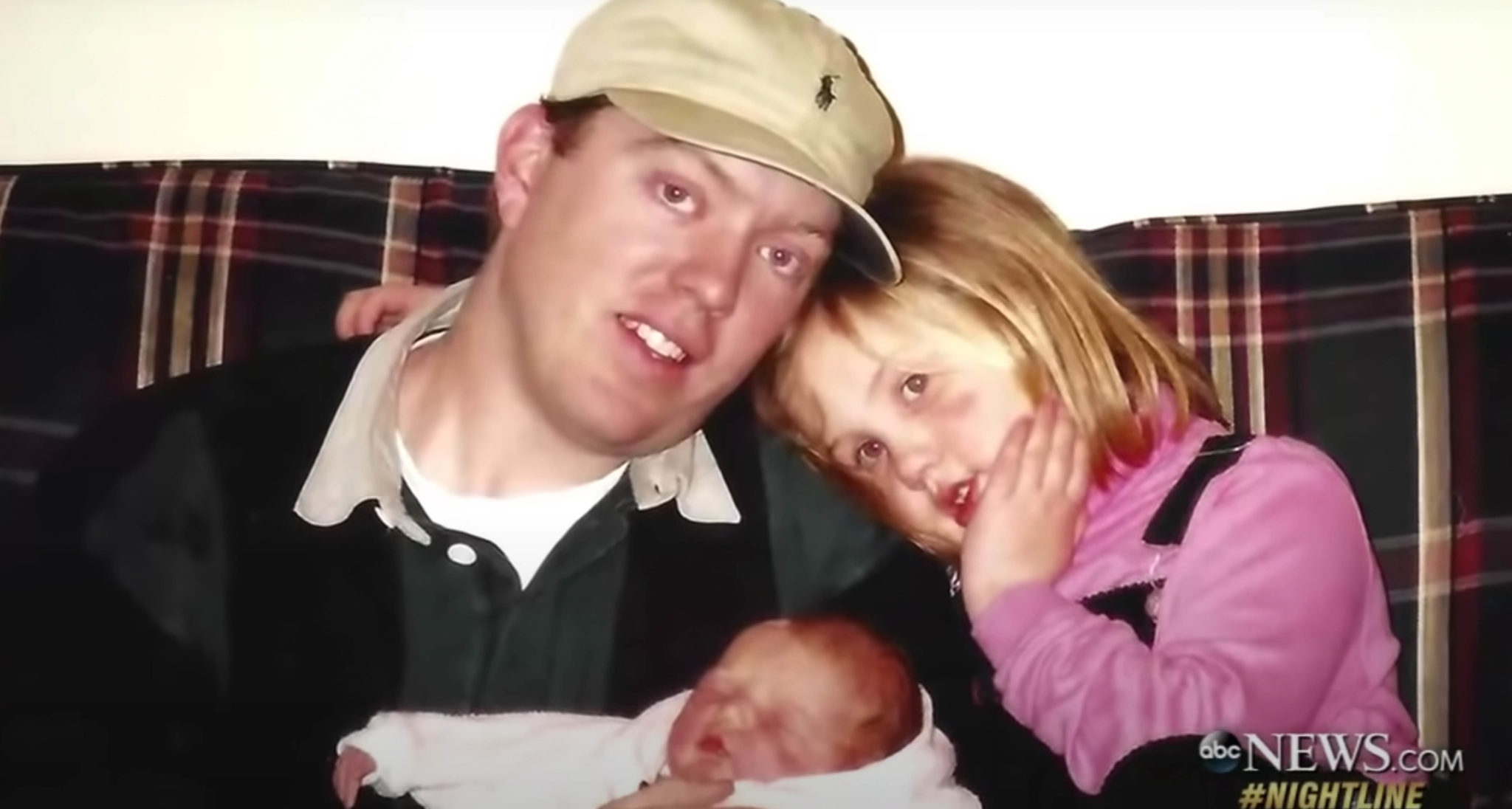
Patrick eventually underwent 71 surgeries and numerous other procedures in an attempt to repair the damage.
But even after all those operations, everyday life remained incredibly difficult.
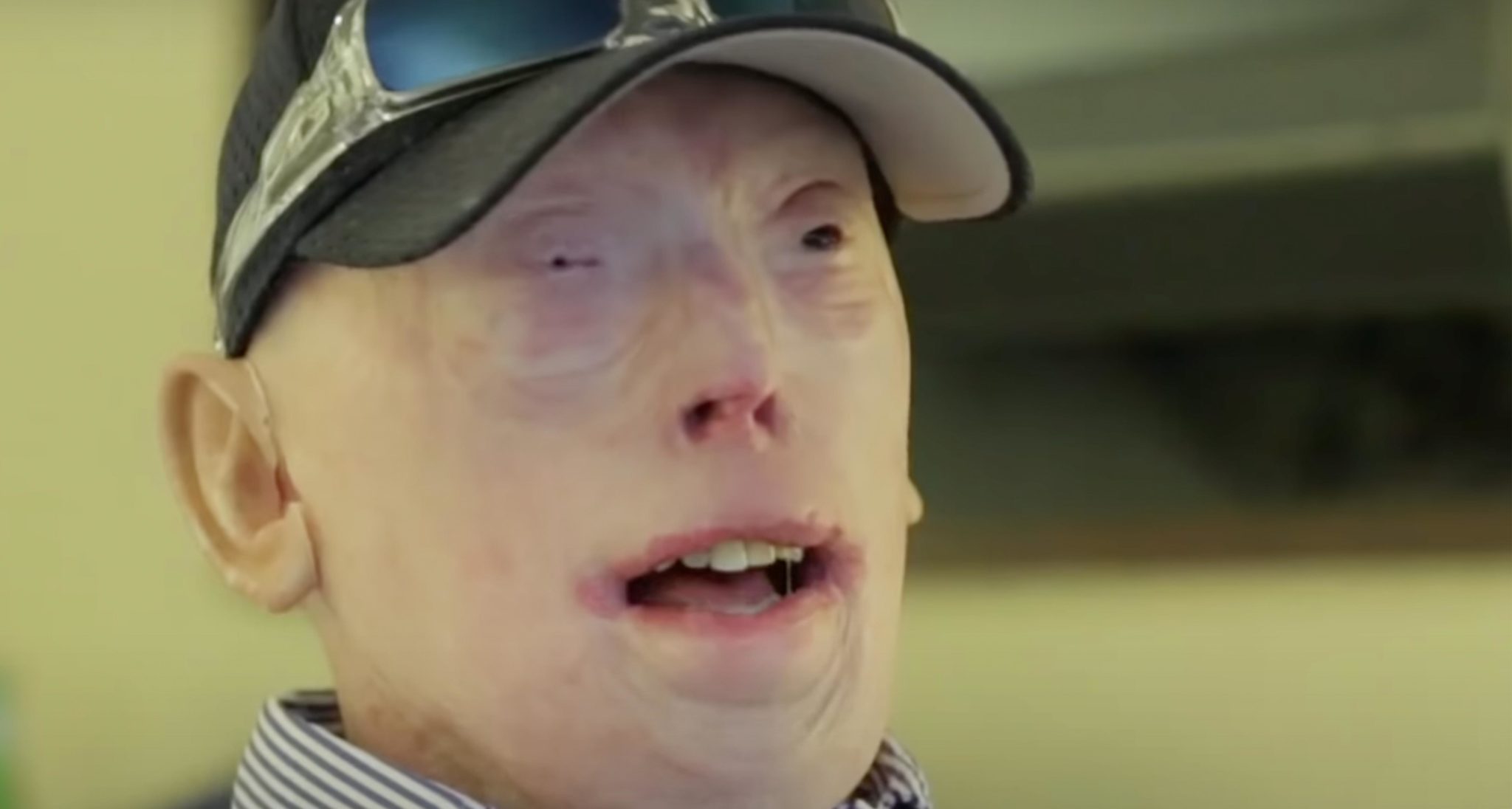
He couldn’t form normal facial expressions.
Eating could be painful.
Laughing could hurt.
And he couldn’t blink or completely close his eyes.
Surgeons eventually used flaps of skin to protect his vision, but Patrick still faced the frightening possibility of gradually losing his eyesight.
The physical pain was only part of the struggle.
The emotional pain followed him everywhere.
When he went out with his children, people stared.
When he attended their sporting events, he had to prepare himself for reactions from strangers.
Sometimes children became frightened and ran away.
Patrick knew that people couldn’t understand what he had been through simply by looking at him.
But he also couldn’t escape the attention.
“I had kids. It was just a tough time. I never got a day off from the injury,” he said.
“You go to the ball field, you have to prepare yourself for the kid that goes running off screaming.”
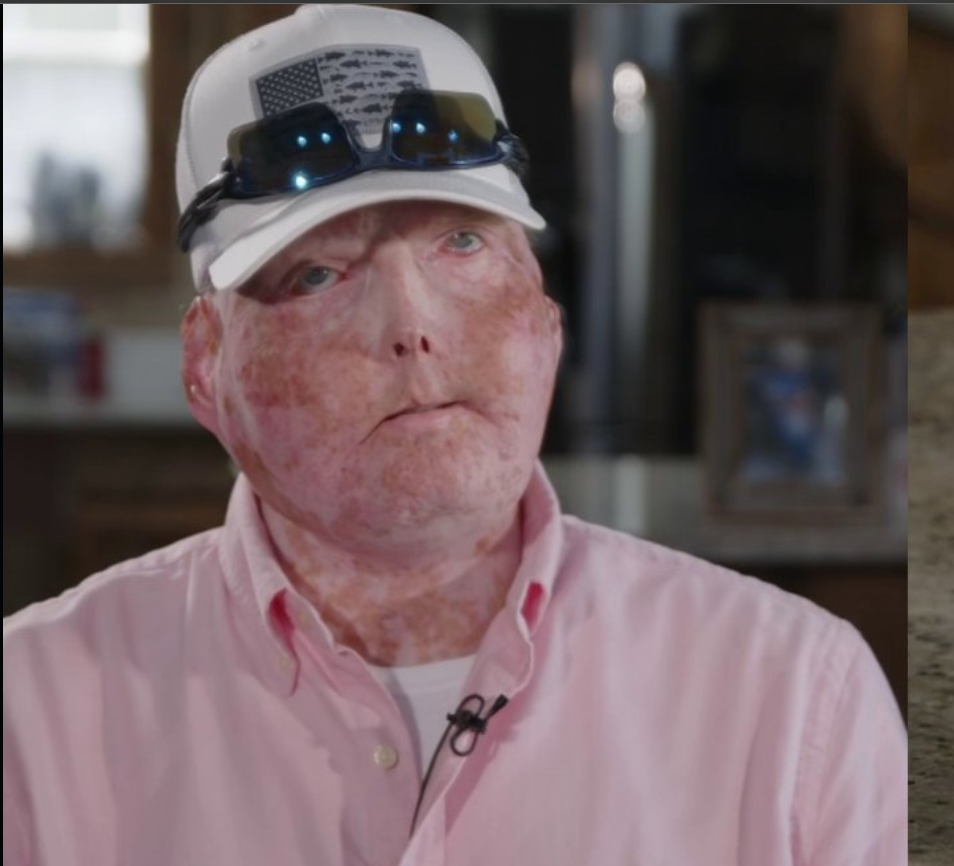
For years, Patrick wore his baseball cap and sunglasses whenever he went out. His prosthetic ears helped replace what he had lost.
But none of it could give him back the life he once knew.
Eventually, he began to lose hope that anything would ever change.
Then Doctors Began Changing What Was Possible
Face transplantation was still a relatively new field.
In 2005, Isabelle Dinoire became the first person to receive a face transplant.
For Patrick, the development offered a possibility that once seemed impossible.
But by then, he had already started to believe that such a procedure might never happen for him.
Then a friend discovered Dr. Eduardo D. Rodriguez at NYU Langone Medical Center in New York.
Rodriguez had previously performed a face transplant.
For Patrick, the search for a possible donor began.
It would not be easy.
After a year, only two potential donors had been identified.
The first appeared to be a good match, but the tissue profile wasn’t suitable.
The second candidate looked promising, but the man’s family ultimately withdrew him from consideration.
Patrick was preparing himself for the possibility that he would never receive a transplant.
Then an unexpected opportunity appeared.
The Donor Who Changed Patrick’s Life
LiveOnNY, a nonprofit organization that coordinates organ donations in the New York area, identified another potential donor.
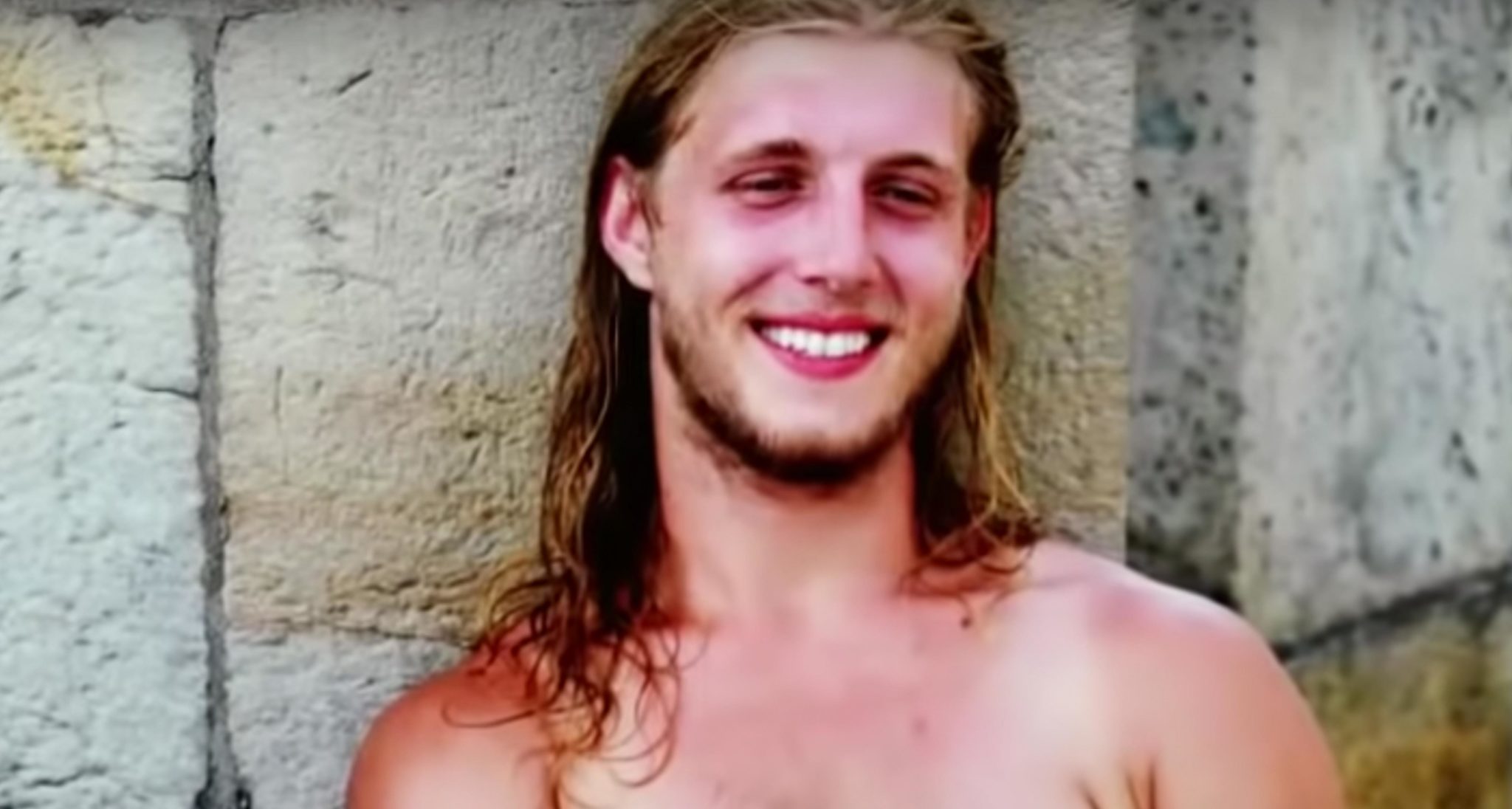
His name was David Rodebaugh.
David was 26 years old when he suffered a massive head injury in a bicycle accident. He was declared brain dead.
After David’s death, his mother, Nancy Millar, made the decision to donate his organs.
His liver, heart and kidneys would help others.
But Nancy also agreed to donate David’s face.
She remembered David’s face fondly.
“I said, ‘You better save his face. He has the face of a porcelain doll,’” she recalled.
Nancy had already discussed organ donation with her son, so when she learned that his face could help Patrick, she did not hesitate.
For Nancy, it meant that something of David could continue to live on.
When she met Patrick, she said she immediately recognized something familiar in him.
She saw strength.
She saw the same kind of energy she associated with David.
There was another connection, too.
David had wanted to become a firefighter.
Nancy believed that Patrick, as a firefighter willing to enter burning buildings to save people, carried something of the same courage her son had possessed.
The connection made the decision even more meaningful.
A 26-Hour Operation
Dr. Rodriguez assembled a team of approximately 100 doctors, nurses and other medical professionals.
Together, they prepared for what would become one of the most extensive face transplants ever performed.
The operation lasted an astonishing 26 hours.
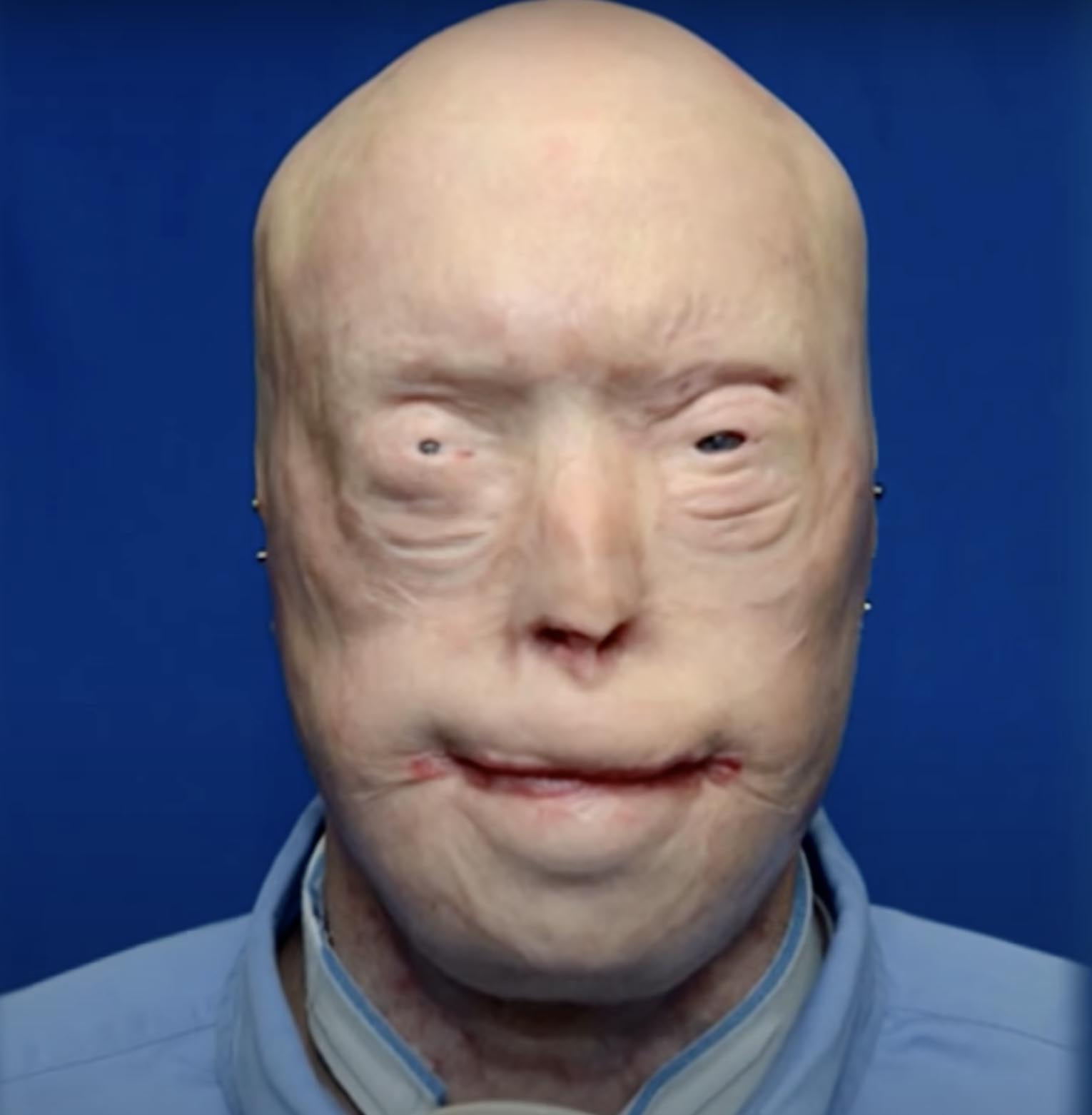
Patrick received a new face and scalp, along with ears and ear canals.
Surgeons also used portions of bone from the chin and cheeks and reconstructed his nose.
Perhaps most importantly, Patrick received new eyelids, restoring his ability to blink naturally.
But the operation carried enormous risks.
Doctors told Patrick that he had only a 50/50 chance of surviving the procedure.
He understood what that meant.
Still, he was willing to take the risk.
“Everything in life has a risk,” Patrick said.
“When it’s your time to go, you’ll go—whether you’re walking down the street and get hit by a car or you’re lying on the operating table.”
Before the operation, Patrick met with his family.
There was a possibility that it could be the last time they ever saw him.
His daughter Alison wondered why her father was willing to take such a dangerous chance.
Patrick had a simple answer.
He wanted to look normal again.
He wanted to be able to walk his daughter down the aisle without hiding behind a baseball cap and sunglasses.
“He said, ‘I won’t have to wear a ball cap and I won’t have to wear my sunglasses. I’ll look normal whenever I get to walk you down the aisle,’” Alison recalled.
“And that right then pretty much sealed the deal for me.”
The Surgery Was a Success
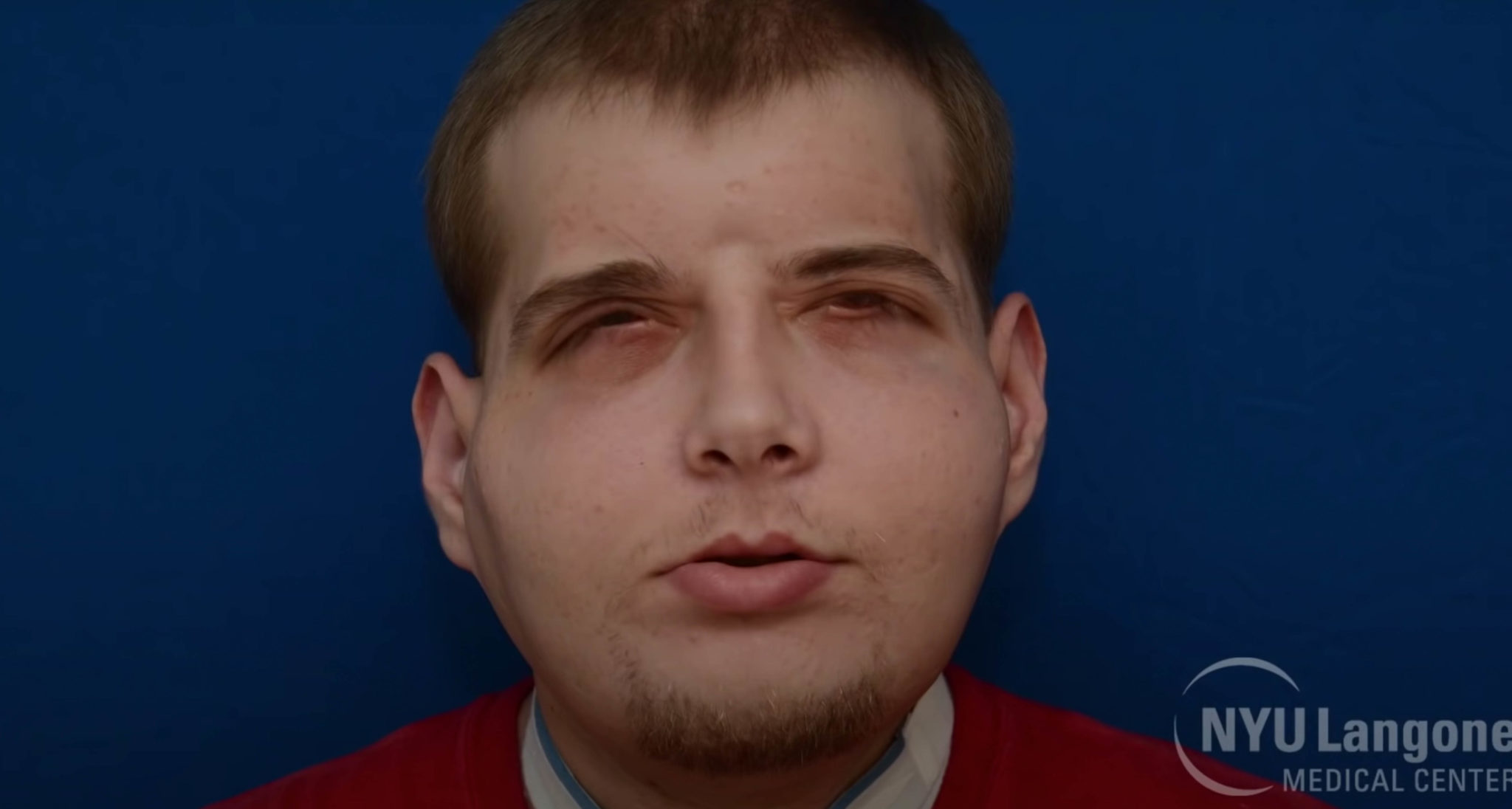
After 26 hours, Patrick’s operation was completed.
The transplant had worked.
But the surgery was only the beginning of another difficult chapter.
During the first week, Patrick experienced frightening complications, including changes in his blood pressure and an unstable airway.
His new face was severely swollen.
He couldn’t simply return to normal life.
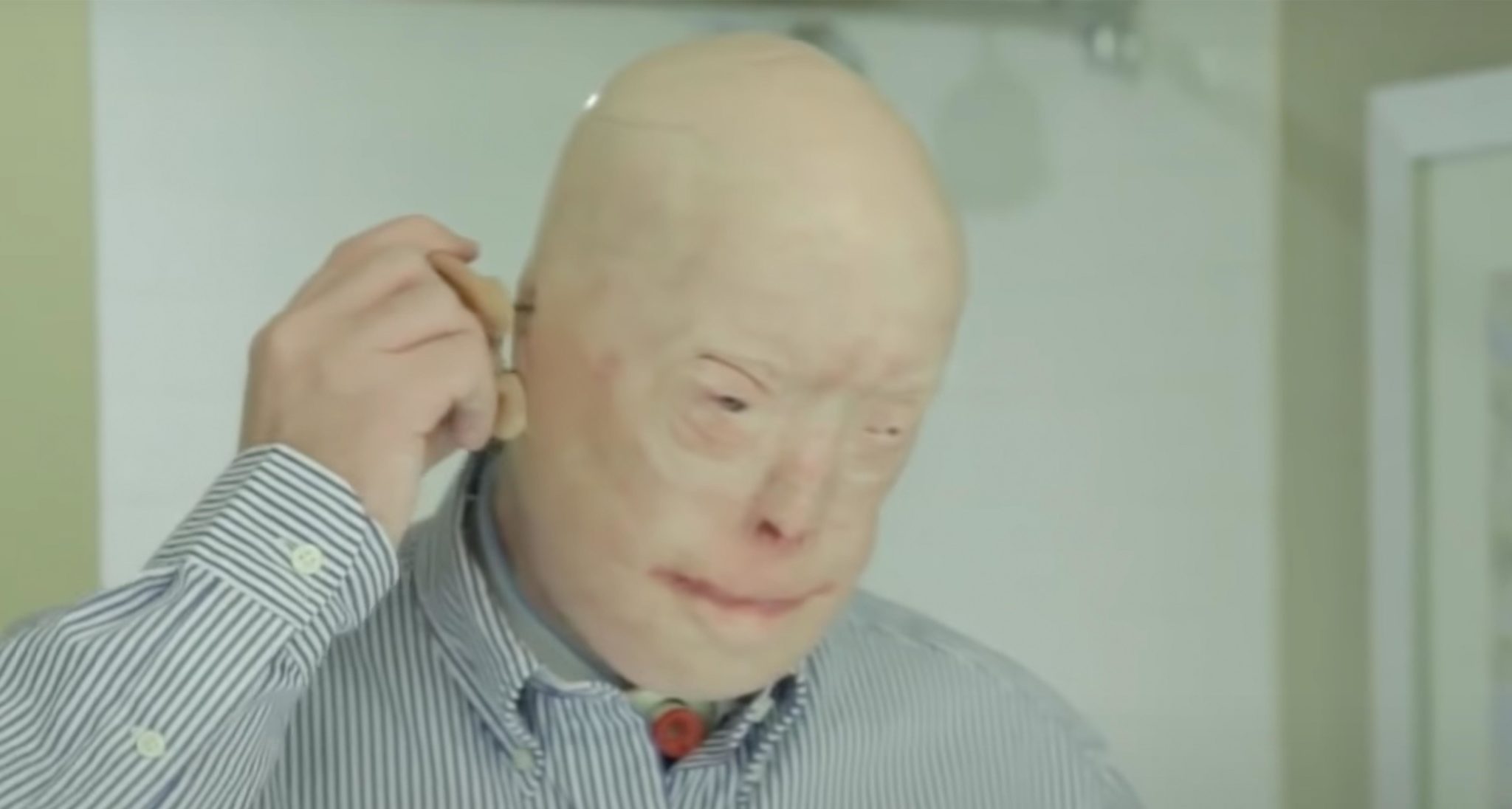
He had to learn how to speak and swallow again.
He struggled with anxiety and frustration.
Even closing his mouth was difficult because of the swelling.
Everything that had once happened automatically had to be relearned.
Yet Patrick had something he hadn’t had in years.
Hope.
He had been given another chance.
Meeting the Donor’s Mother
One of the most emotional moments came when Patrick met Nancy Millar, David Rodebaugh’s mother, after the operation.
Nancy had made the decision that allowed Patrick to receive David’s face.
When the two finally met, Nancy had one request.
She wanted to kiss Patrick on the forehead.
“I said, ‘Can I kiss your forehead?’” Millar recalled.
It was something she had done for David every night when he was a child.
“Every night before David went to bed when he was little, I kissed his forehead.”
For Patrick, meeting Nancy was equally emotional.
“I’ve been waiting a year to meet her. I’m just very grateful,” he said.
“Without her, it wouldn’t have been possible. It’s like she’s family. We connected that easily.”
The transplant had changed Patrick physically.
But it also created an extraordinary connection between two families who had been brought together by tragedy and loss.
Eleven Years Later, His Life Looks Very Different
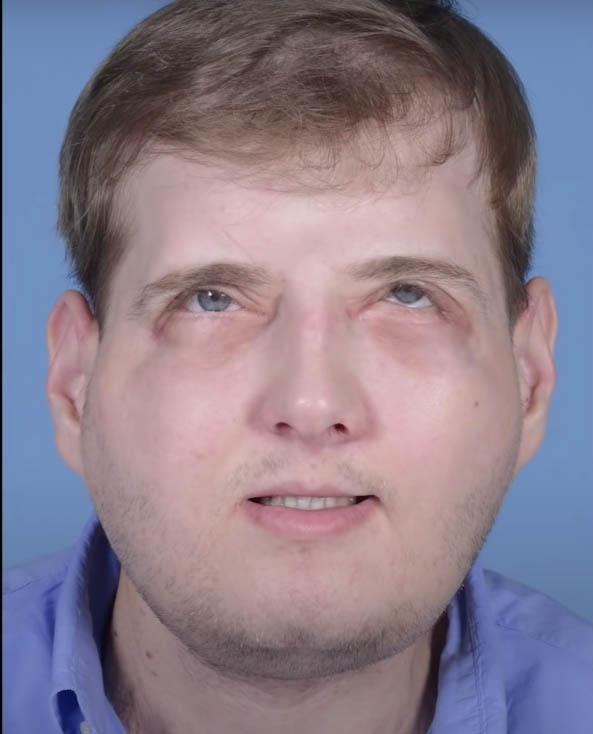
Over the years, Patrick’s new face healed.
The swelling gradually went down, and he was able to regain many abilities that had been lost after the fire.
However, the transplant came with a lifelong responsibility.
Patrick must take anti-rejection medication to prevent his immune system from attacking the transplanted tissue.
Despite that, the procedure gave him something he had spent years believing he might never have again — the opportunity to live a more ordinary life.
Patrick remained deeply grateful to David and his family.
“I am deeply grateful to my donor and his family,” he said.
“Even though I did not know who they would be, I prayed for them every day, knowing the difficult decision they would have to make in order to help me.”
He also expressed his gratitude to Dr. Rodriguez and the entire medical team.
“I hope they see in me the goodness of their decision,” he said.
“I also want to thank Dr. Rodriguez and his amazing team. They have given me more than a new face. They have given me a new life.”
Patrick’s Message Is About Hope
Today, Patrick wants his story to mean more than just a remarkable medical achievement.
He wants it to serve as a message to people who may feel that their lives have been permanently destroyed by an injury or tragedy.
Patrick knows what it feels like to believe there is no way forward.
He spent years hiding his face.
He watched children run away from him.
He endured pain, surgeries and staring from strangers.
He feared he would never again experience an ordinary life.
But his story took a different turn.
In 2021, Patrick spoke about building a new home and working on a book about his experience.
“I’m working on a book,” he said.
“Because I want to show the world that you can have hope. I wouldn’t want people that were like me years ago to think that’s it, I have to live like this. You don’t. You can accomplish anything.”
Those words capture the heart of Patrick Hardison’s journey.
The firefighter who once entered a burning building to save someone else nearly lost his own life that day.
He endured devastating burns, 71 surgeries and years of emotional pain.
Then, in 2015, he took an extraordinary chance.
A 26-hour operation gave him a new face.
But perhaps even more importantly, it gave him something he had nearly lost years earlier — hope for the future.
Patrick’s story is also inseparable from the generosity of David Rodebaugh’s family and the medical team that made the transplant possible.
One family experienced an unimaginable loss.
Another was given an opportunity to begin again.
And from that tragedy came a story of courage, sacrifice and a second chance at life.